
“I’ve watched the lira tank for 30 years […] it can devalue 100% overnight,” Aran Hawker warns potential deposit-based CBI applicants as KKM ends.
Turkey’s central bank terminated its Foreign Exchange-Protected Deposit Program (KKM) on August 23, closing an anomalous chapter in global citizenship by investment (CBI) where government guarantees against currency depreciation had transformed bank deposits into quasi-sovereign wealth vehicles.
The KKM mechanism offered depositors protection against lira depreciation through a government guarantee structure. Under the program, if the Turkish lira’s decline exceeded the interest rate earned during the deposit period, the central bank compensated depositors for the difference, effectively guaranteeing the investment’s dollar value.
For CBI applicants maintaining $500,000 in Turkish lira deposits, this arrangement provided crucial protection against currency volatility while fulfilling citizenship investment requirements.
While the $500,000 deposit route remains available for Turkish citizenship applicants, the elimination of currency protection fundamentally alters its risk profile.

The KKM program’s closure reflects Turkey’s broader monetary normalization. Balances collapsed from $143 billion in mid-2023 to $11 billion by termination, as declining exchange rate volatility eroded the protection premium that had attracted both domestic savers and foreign citizenship seekers.
Finance Minister Mehmet Şimşek framed the closure as removing a “substantial contingent liability” from government accounts.
Opposition politicians place the program’s total fiscal cost above $200 billion when combined with related monetary interventions, though this encompasses broader economic policies beyond the CBI component.
“I’ve Watched the Turkish Lira Tank for 30 Years“
Aran Hawker, co-founder of CIP Turkey, says the deposit option accounts for a minority of Turkish CBI applicants, and that “10% of the inquiries we get are for the deposit route.” This pathway requires a $500,000 lira deposit requirement for citizenship eligibility, though currency protection no longer shields against devaluation risk. The arrangement now places full currency exposure on applicants.
Hawker has consistently advised against the deposit option even when it carried government protection. His skepticism centers on temporal mismatches between protection periods and deposit terms.


He explains that he has “watched the Turkish lira tank for 30 years solid, and if they’re going to give you two-year protection on a three-year deposit, it can devalue 100% overnight.” Even experienced banking professionals who believed they could hedge positions “are crying their eyes out because they’re still in for another year and they’re watching their money dissolve,” according to Hawker.
He says the route’s structure contains inherent vulnerabilities. While deposits carry standard deposit insurance, coverage remains capped at $10,000. Without currency protection, applicants face both credit and currency risk directly.
Government “Always Wanted People to Buy Property“
Turkish real estate transactions surged 25% in the first seven months of 2025, reaching 835,000 total sales. Construction sector output grew 11% year-over-year in the second quarter, accelerating from 9% growth in the previous period.
Foreign participation remained modest through the KKM termination period. Home sales to foreigners totaled 1,913 in July 2025, representing a 19% year-over-year decline even as overall domestic sales accelerated. Non-resident real estate purchases recorded $133 million in net inflows during June, according to balance of payments data.
The scale disparity is substantial. Hawker argues that the “supply and demand is driven by the domestic market, not by the 60,000 annual foreign buyers, nor the much smaller group of about 6,000 citizenship by investment program (CIP) applicants.”
He says the government “always wanted people to buy property,” pointing to domestic market dynamics that dwarf CBI volumes. More than two million annual Turkish buyers drive pricing fundamentals rather than the relatively small foreign purchaser segment.
Real estate prices reflected this mixed dynamic. The Residential Price Index showed 33% nominal growth in July but declined 1% in real terms, indicating that property values had not yet outpaced broader inflation trends at the time of the KKM closure.
The program’s phase-out timeline suggests measured rather than panicked investor behavior. Despite the central bank’s January announcement that it would terminate the program, foreign deposit flows showed no unusual surge before the August closure.
Non-resident bank deposits declined marginally from $22.45 billion to $22.17 billion between the end of July and August 22, remaining essentially flat in the weeks preceding termination.
Year-over-year comparisons show January-April 2025 foreign deposit inflows exceeded 2024 levels by only $115 million, representing just 3% growth rather than any dramatic surge. The data indicate that markets had largely anticipated and absorbed the KKM’s elimination.
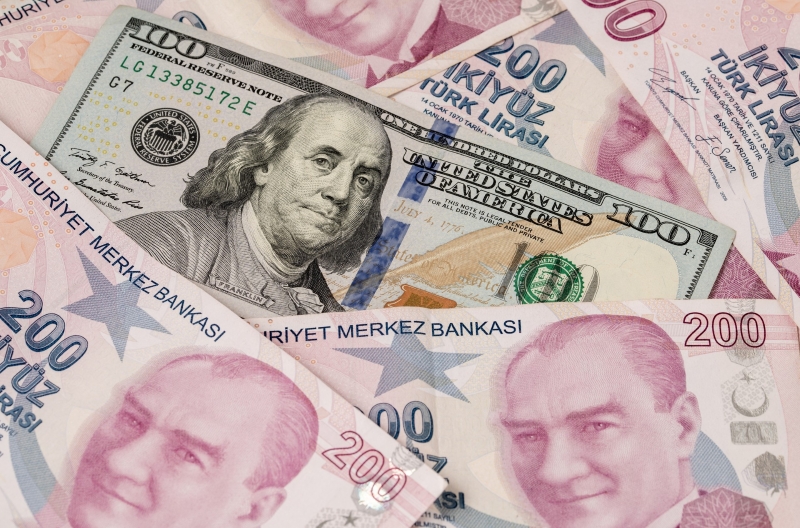
This momentum reflects broader economic dynamics beyond CBI. Turkish households have parked funds in high-yield lira deposits rather than property during the currency protection era. As interest rates normalize and protection schemes end, domestic capital begins rotating toward other assets.
Hawker anticipates this rotation will intensify. He explains that “more than two million a year” local property sales to Turkish buyers represent “the important market that’s been relatively dormant for two years now,” emphasizing that domestic demand dynamics dwarf the roughly 6,000 annual CBI applications. He says the Turkish market’s revival could drive price appreciation after two years of relative stagnation.
“Demand for CIP Won’t Decrease”
Turkey’s economic acceleration supports the real estate thesis. Gross Domestic Product (GDP) growth jumped to 5% in the second quarter from 2% in the first, exceeding economists’ projections of 4%. Fixed capital formation surged from 2% to 9% growth, indicating renewed investment appetite across sectors.
The timing creates what Hawker characterizes as optimal entry conditions. Hawker does not believe that “demand for the CIP will decrease due to the KKM’s closure, but shift to real estate, which is a safe option,” noting his personal advice that clients “go for real estate.”
Existing KKM account holders retain protection until maturity, creating temporary market segmentation. Current CBI investors maintain their currency safeguards while new applicants face direct lira exposure. This grandfathering provision affects thousands of pending applications but establishes clear parameters for the transition period.
