Senior conservatives in Germany’s governing coalition want foreign residents to wait eight years for citizenship again. Most would also have to give up their first passport.
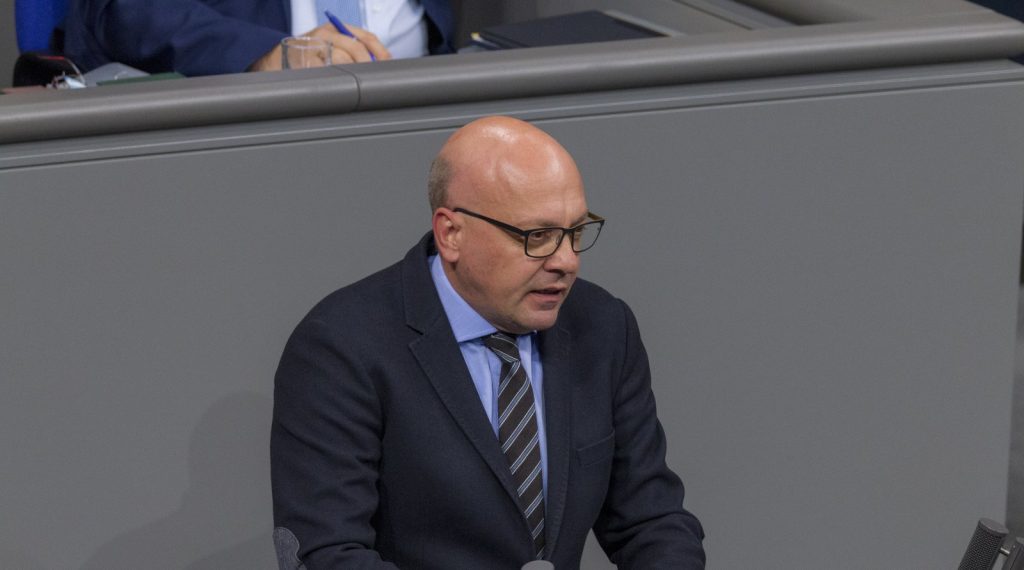
Günter Krings, a deputy leader of the CDU/CSU parliamentary group, and CDU interior expert Alexander Throm drafted the plan, The Local reported, citing Bild. The Social Democrats (SPD), who govern with the conservatives, are examining it.
The Proposal Would Reverse the 2024 Citizenship Reform
Four changes to the naturalization law make up the plan:
- Applicants would need eight years of residence instead of five. The longer period would also apply to children born in Germany to foreign parents.
- Dual citizenship would become an exception. Most applicants would have to renounce their old nationality first.
- The German language test would rise from B1 to B2.
- Any receipt of social assistance would rule an applicant out, with no exceptions.
Under the current law, which took effect on June 27, 2024, foreign residents can naturalize after five years and retain their first nationality. Chancellor Friedrich Merz’s coalition scrapped a three-year fast track in 2025.
In its coalition agreement, the government promised to leave the five-year rule and dual citizenship untouched, so the proposal would break that deal.
Krings floated a similar package in September, after the AfD won its first state election, as IMI reported at the time.
An eight-year wait with B2 German “would nevertheless feel considerably more demanding,” says Vito Magagnino, managing partner of Zurich-based Mirabello Consultancy. In his view, people “building a life there from scratch” would feel it most. Several other European states naturalize foreign residents after about five to seven years, he notes.
If the rules tighten, “we would expect more residents and newcomers to weigh alternatives elsewhere in Europe,” Magagnino says.
Plan Covers Future Applications Only
The plan targets future applications only, according to the Munich newspaper Merkur. Germany’s constitution protects existing citizens from losing their nationality.
EU citizens could naturalize without giving up their nationality under the proposal, the expat site IamExpat reported.
Advisers Expect Passports Acquired Before Any Change to Be Protected
The 2024 reform also allowed Germans to take a second nationality without losing their German one. Before that, Germans who voluntarily took a nationality outside the EU and Switzerland generally lost German citizenship without a prior retention permit.
Reports on the CDU/CSU plan do not say whether that rule would return. Since the 2024 change, the number of German clients exploring a second citizenship with his firm “has risen markedly,” Magagnino says.
Christoph Heuermann, founder of the flag theory consultancy Staatenlos, doubts the old rule will fully return. The CDU “lacks the political leverage to push a complete ban on dual nationality through,” he says, against its coalition partners and the opposition.
Even after a rollback, EU nationalities and retention permits would give Germans a route to dual citizenship, as before 2024, Heuermann expects. Second nationalities acquired under the current law “would be protected by grandfathering,” he says.
Alex Recouso, co-founder and CEO of CitizenX, reads the plan as a limit on Germans who want to leave. “Restricting dual citizenship works like a capital control on people,” he says.
Recouso does not “expect the restriction to apply retroactively,” but Germans “should factor the risk into their passport portfolio management,” he says. CitizenX expects the number of Germans seeking a second passport “to keep rising,” he adds.
If the old rule returned, Magagnino expects “a short-term rise in demand” from Germans who want to act under the current law. A passport obtained lawfully before any change “should not normally be affected,” he says. Many clients will see the months before any change “as a window to act rather than a reason to wait,” he adds. “The final wording of any reform will decide,” he cautions.
His firm reports “a massive boom in Germans acquiring second citizenships,” Heuermann says. Most Germans will not give up German nationality, in his view, barring escalations such as conscription or citizenship-based taxation.
To many, renunciation brings the stigma of Heimatverrat, or betraying one’s homeland, Heuermann notes. He would not “relinquish Germany for my Vanuatu passport alone,” he adds.
Asylum Package Links Citizenship to Refugee Residence Rights
According to Bild, the citizenship changes form part of a wider asylum package. Social Democrats want permanent residence for refugees in work or training in return, Merkur said.
A meeting of party leaders on the package could come next week, The Local reported on November 19.
Hakan Demir, the SPD’s deputy interior spokesman, rejected the idea of talks. “Dazu gibt es keine Verhandlungen” (“There are no negotiations on this”), he told the Tagesspiegel.
“Wir haben ein gutes Einbürgerungsrecht, und das wird auch so bleiben,” Demir also told the paper, saying the current law would remain in place.
Residents Who Qualify Now Can Apply Under the 5-Year Rule
So far the plan exists only as a coalition proposal, and any change needs SPD votes in the Bundestag. Until a new law takes effect, the five-year rule and dual citizenship apply.
The German passport “remains one of the strongest on the planet,” according to Heuermann. People who qualify “should seize the opportunity as quickly as possible,” he says.
Anyone who meets every current requirement “has good reason to prepare and file a complete application now,” Magagnino says. Applicants “should not assume that the filing date alone protects them,” he adds.
When Germany abolished the three-year fast track on October 30, 2025, lawmakers added no transitional rule. Authorities then decided pending fast-track applications under the five-year requirement. Coverage of the new plan gives no detail on how pending files would fare.
IMI program guide: Germany Citizenship by Descent (StAG §5 and §15)