Bulgaria’s government has tabled a bill in the National Assembly that would withdraw permanent residence on grounds of absence.
Any foreigner who spent less than six months and one day in the country during the previous calendar year would lose the status. Every permanent residence holder falls within the proposed measure, whatever route produced it.
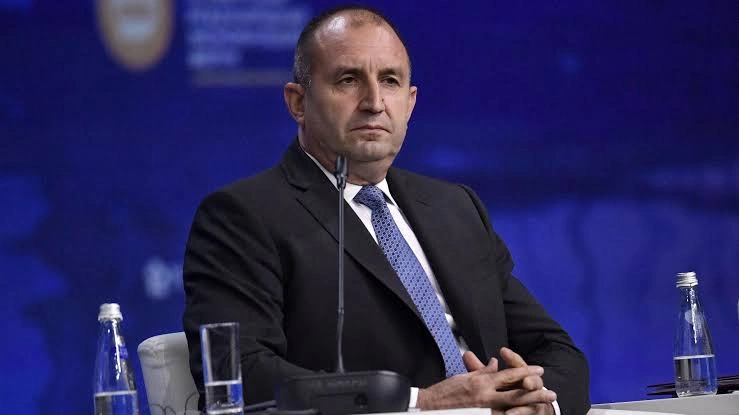
The Council of Ministers approved the draft on July 27 by Decision 575. Prime Minister Rumen Radev signed both that decision and the letter transmitting the bill, which the National Assembly registered on July 28 under reference 52-602-01-29.
For the Bulgarian golden visa, the change would swap an absence rule almost impossible to breach for a presence rule almost impossible to satisfy from abroad. A qualifying fund subscription of BGN 1 million, or €511,292 at the fixed conversion rate, currently buys permanent residence outright with no obligation to live in Bulgaria.
Permanent residents move from a European absence test to a Bulgarian presence test
Article 40, paragraph 1 of the Law on Foreigners in the Republic of Bulgaria lists the grounds on which the authorities withdraw a foreigner’s right of residence. Item 6 of that list currently reaches holders of both long-term and permanent residence permits, according to the provision as quoted by a Bulgarian immigration practice in December 2025. It bites after 12 consecutive months of absence from the territory of the European Union as a whole.

Section 17 of the bill rewrites item 6 so that it reaches long-term residence permits alone. New item 24 then applies to permanent residence holders, and it measures presence in Bulgaria rather than absence from the Union.
Two things change at once for anyone holding Bulgarian permanent residence. The measuring stick narrows from the whole Union to a single country. Presence replaces absence, so a holder must be there for most of the year rather than merely avoid a full year away.
Who the retained investor exemption still protects is unclear
According to the text the bill reproduces, the version of item 6 being replaced carves out permanent residence granted on the investment grounds. Those sit in Article 25, paragraph 1, items 6 to 8, 13, and 16, and in Article 25g. A narrower carve-out covering Article 25g alone appears in the same December 2025 practitioner article, quoting the provision as currently in force.
The redrafted item 6 keeps that carve-out while confining the provision to long-term residence permits. Whether it still protects anyone turns on a question of Bulgarian law, namely whether a foreigner can hold long-term residence and permanent residence at once.
An investor holding both would stay shielded from the 12-month rule. One holding permanent residence alone would fall outside item 6 entirely, and into item 24.
New item 24 contains no exemption of any kind. It spares neither investors nor foreigners caught abroad by a declared state of emergency, a shield that item 6 retains for long-term residents.
Withdrawal is mandatory, and one familiar safeguard may not reach the new ground
A Bulgarian immigration practice describes withdrawal under Article 40, paragraph 1 as imperative rather than discretionary. Two provisions temper it.
Before imposing a coercive administrative measure, the authorities must weigh length of residence, family circumstances, and social and cultural ties under Article 44, paragraph 2. Directive 2003/109/EC separately permits member states, at Article 9(2), to disregard long absences in exceptional circumstances.
Whether the directive reaches item 24 is an open question. It governs EU long-term resident status, which is precisely the status the bill leaves inside item 6. Permanent residence under Bulgarian law is a national creation, and the bill moves it into a purely domestic rule.
Investment thresholds convert into euro without moving in substance
Section 11 restates the Article 25 investment minimums in euro at the fixed conversion rate, following Bulgaria’s adoption of the currency on January 1. BGN 1 million becomes €511,291.88, BGN 2 million becomes €1,022,583.76, and BGN 6 million becomes €3,067,751.29.
Three further figures follow the same arithmetic: BGN 500,000 becomes €255,645.94, BGN 3 million becomes €1,533,875.64, and BGN 5 million becomes €2,556,459.41. Every qualifying amount holds steady in real terms.
The government offers one sentence of justification
The explanatory memorandum attributes the permanent residence measure to volume. Rising numbers of residence applications create a need for conditions allowing stricter control over the residence of foreigners holding permanent residence, it says. No security concern appears, no European obligation, and no reference to the investment routes.
Section one of the memorandum sets out the reasons for the legislation. Those run through the single permit for residence and work, border screening, Schengen accession, personal documents, labor migration, health, and the conversion of fines into euros. Permanent residence appears in none of them, surfacing only in section two as an aim without a stated cause.
No commencement date and no transitional rule
The bill runs to Section 38 and stops. Nothing addresses when Section 17 would take effect, nothing grandfathers existing permit holders, and nothing specifies which calendar year the authorities would test first. Under Article 5, paragraph 5 of the Bulgarian Constitution, legislation enters into force three days after promulgation in the State Gazette unless it says otherwise.
Read literally, a law promulgated in late 2026 would put this year’s attendance in issue for permits held throughout a year in which no such requirement existed.
Extended residence permits keep their terms untouched
Section 7 amends the extended residence grounds in Article 24, paragraph 1, but only to convert currency: BGN 100,000 becomes €51,129.19, BGN 600,000 becomes €306,775.13, and BGN 250,000 becomes €127,822.97. Item 24 does not reach those permits, because it is confined to permanent residence.
That confines the requirement to the status carrying Bulgaria’s distinguishing feature. Immediate permanent residence is not unique in Europe, since Malta’s residence program and Cyprus both grant it at the outset.
What Bulgaria alone combines is permanent residence from day one, no obligation to live there, and naturalization eligibility five years later on an A1 language test. Malta and Cyprus each require years of actual residence before citizenship.
The consultation drew 14 comments, none on permanent residence
Public consultation on the draft opened on April 1 and closed on May 4, run by the Ministry of Interior. Nine authors filed 14 comments between them, among them the Bulgarian Industrial Association, the Association of Industrial Capital in Bulgaria, the Bulgarian Helsinki Committee, and the Employment Agency.
Between them, they addressed border screening, the single permit and employer changes, seasonal worker housing, medical insurance, an au pair framework, and the rounding of euro fines. Not one comment mentioned the permanent residence requirement.
Committee stage, and the constituency beyond investors
Nothing has changed yet, and nothing may. Bills in Bulgaria go to committee, then to a first reading, then to amendments and a second reading. Text that emerges frequently differs from text that went in, and advisers telling clients the Bulgarian program is finished are well ahead of the legislature.
What has changed is the risk profile. Bulgaria has been marketed for years on immediate permanent residence with no physical presence and a five-year path to citizenship. A sitting government has now put a presence requirement in writing, with a stated intention to tighten control over exactly this category of resident.
The provision also reaches far beyond investors. Spouses of Bulgarian citizens, people of Bulgarian descent, and long-settled foreigners all hold the same permanent residence permit. Item 24 draws no distinction between them, and that breadth is the likeliest source of opposition in committee.
Cardholders would do better watching the committee stage than acting on a draft. Those approaching five years and eligible to naturalize have an obvious reason to move now, since withdrawal of the permit would reset the qualifying clock.