

Afghanistan’s Economic Commission has endorsed a proposal to grant foreign investors residency permits ranging from one to ten years in exchange for capital investment, marking one of the Taliban administration’s most direct efforts to attract international financing since seizing power in August 2021.
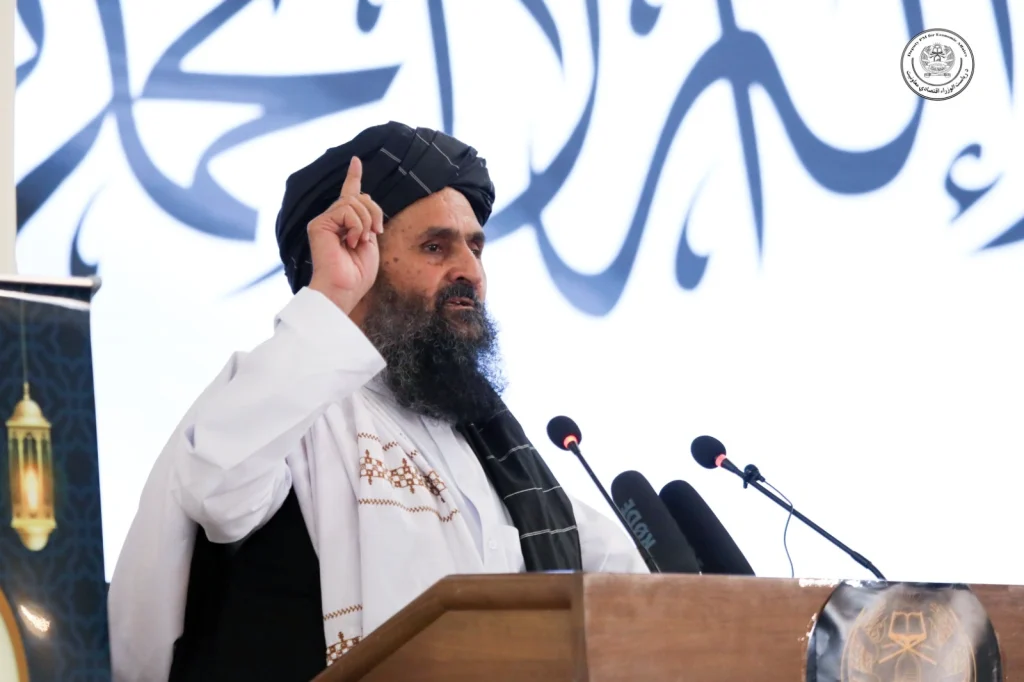
Deputy Prime Minister for Economic Affairs Mullah Abdul Ghani Baradar chaired the February 7 meeting at Marmarin Palace, where the commission approved the plan in principle.
A designated committee will determine residency duration categories based on investment volume and submit recommendations to the commission’s next session, according to statements from the deputy prime minister’s office.
The Taliban administration has not published a formal decree or regulatory framework. Officials have not announced an implementation timeline or specified minimum investment thresholds.
The proposal does not specify whether residency permits could lead to permanent residence or citizenship.

Since returning to power in August 2021, the Taliban administration has not promulgated a new citizenship or nationality law, reinstated a formal naturalization process, or published any legal pathway for foreigners to become Afghan citizens.
All foreign nationals currently require visas to enter Afghanistan, with exceptions only for travelers born in Afghanistan or to Afghan parents.
The Afghan passport ranks last globally in the Henley Passport Index, Latitude Group’s index, and Arton Capital’s Passport Index, offering visa-free access to only 24 destinations according to Henley.
The commission also discussed implementing the Transports Internationaux Routiers (TIR) international customs transit system at Afghanistan’s border crossings.
A separate committee will assess the initiative’s feasibility. TIR enables sealed goods to transit multiple borders under customs supervision without repeated inspections, reducing clearance times from weeks to hours at some crossings.

Afghanistan’s economy contracted 27% across 2021 and 2022 following the U.S. military withdrawal and subsequent cutoff of international assistance, according to World Bank data.
The economy has recovered only 10% of those losses, with projections suggesting recovery to pre-2021 output levels could require over a decade at current growth rates.
According to HOKANEWS, experts expect early interest would likely come from smaller regional firms rather than major multinational corporations.
International response has remained muted. HOKANEWS quoted an unnamed compliance specialist who noted that “residency alone doesn’t remove legal and reputational risks.”
Legal experts supposedly said that “sanctions regimes and compliance rules could limit the ability of foreign firms to invest, regardless of residency incentives.”
The United States and allied nations maintain sanctions targeting Taliban officials and restrict financial transactions with Afghanistan’s banking system.
AtlasPress reported that economic experts emphasized that attracting foreign investment cannot rely solely on granting residency, noting that security, legal transparency, and political stability are fundamental factors in building investor confidence.
