

Saint Vincent and the Grenadines’ planned citizenship by investment (CBI) program has become the centerpiece of a heated parliamentary clash, according to IWN.
Prime Minister Goodwin Friday formally introduced the initiative in his EC$1.9 billion budget address on February 9, prompting Opposition Leader Ralph Gonsalves to liken CBI revenue to a narcotic dependency, warn of currency devaluation across the Organisation of Eastern Caribbean States (OECS), and reveal what he described as direct US pressure on the new administration to abandon the program entirely.
Foreign Minister Fitz Bramble entered the fray a day later, rejecting Gonsalves’ claim that Vincentian diplomats would become “roving passport sales persons” under the new government.
“Economic Statecraft” vs. “Selling Passports”
Friday’s budget speech reframed the country’s foreign policy as a vehicle for economic growth. The 2026 budget “marks a strategic repositioning” that moves SVG away from a “traditionally representational portfolio toward a platform for economic statecraft,” the Prime Minister told Parliament.
Every external relationship, under this vision, should translate into “a tangible economic outcome” through commercial diplomacy, investment facilitation, and risk containment.

Gonsalves offered a blunter interpretation. All the talk of commercial diplomacy and investment facilitation “means one thing: Selling passports,” the 79-year-old former Prime Minister argued, accusing the government of lacking “the courage to say that.”
Bramble, an economist and former diplomat who was absent when Gonsalves made those remarks, responded during his own contribution to the debate.
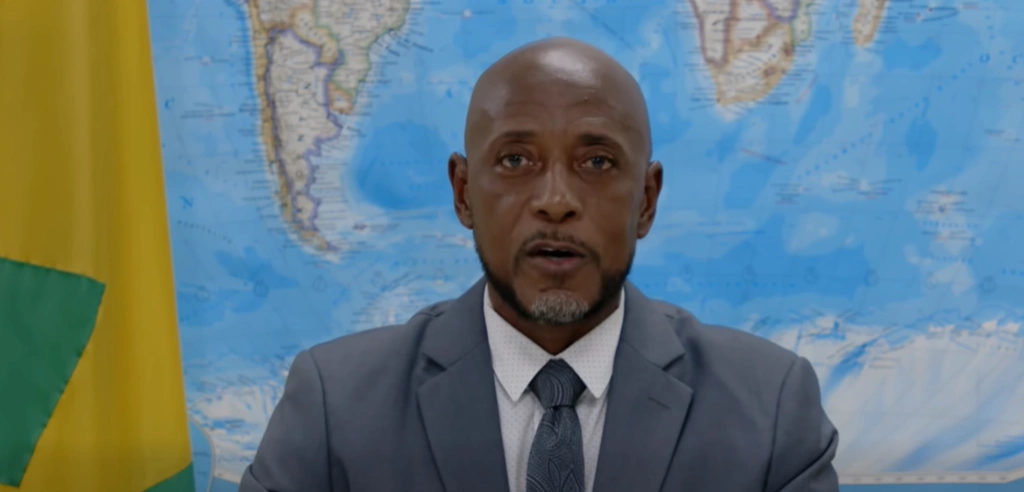
He expressed deep disappointment that the country’s longest-serving Prime Minister, who held office for four months short of 25 years, would characterize the foreign service in those terms.
“After that comment this morning, after that comment this morning, after that comment this morning, I would leave that right there,” the Foreign Minister told lawmakers, repeating the phrase three times for emphasis.
Washington’s Warning
Gonsalves’ most explosive claim went beyond domestic policy disagreements, as per the St Vincent Times.

The United States, according to the former Prime Minister, directly advised the NDP administration against pursuing CBI and shifting diplomatic recognition from Taiwan to China.
“The Americans told the NDP administration that while it is their sovereign decision to make, the United States would prefer if the government did not take specific actions regarding foreign relations and economic policy,” Gonsalves told Parliament.
This counsel, he added, was conveyed to “the highest levels of the Saint Vincent government.”
The Opposition Leader framed the dual pursuit of CBI and a potential China pivot as “risky business, reckless business” that carries grave consequences for the nation.

Taiwan, China, and the “Hook in Your Gill”
On the diplomatic front, Gonsalves warned that courting Beijing while attempting not to antagonize Washington amounts to a dangerous gamble. Reliance on Chinese financing, the former Prime Minister argued, creates a dependency he likened to “a hook in your gill,” one that compromises national sovereignty.
Existing loan agreements contain clauses regarding “material change in circumstances,” Gonsalves cautioned. A switch in diplomatic relations from Taiwan to China would trigger those provisions, allowing Taiwanese creditors to “call for all the remaining portion of the principal debt and interest to be paid” immediately.
The financial exposure compounds an already constrained fiscal position. SVG carries over $3 billion in public debt, and the Prime Minister himself has acknowledged the country “can’t borrow much more.”
A “Sovereign Capital Mobilization Strategy”
Friday described SVG’s planned CBI program not as a “revenue-at-all-costs” exercise but as a “sovereign capital mobilization strategy” built to finance development and climate resilience without expanding national debt.
All proceeds will flow through the Saint Vincent and the Grenadines Investment Fund (SVGIF), a legislatively ring-fenced vehicle barring funds from recurrent spending or political discretion.
The administration says a legally binding Fiscal Resilience Protocol will channel 100% of non-debt capital toward three areas: Climate-resilient infrastructure and productive sector investment, healthcare and education capacity building, and national debt reduction paired with a disaster liquidity buffer.
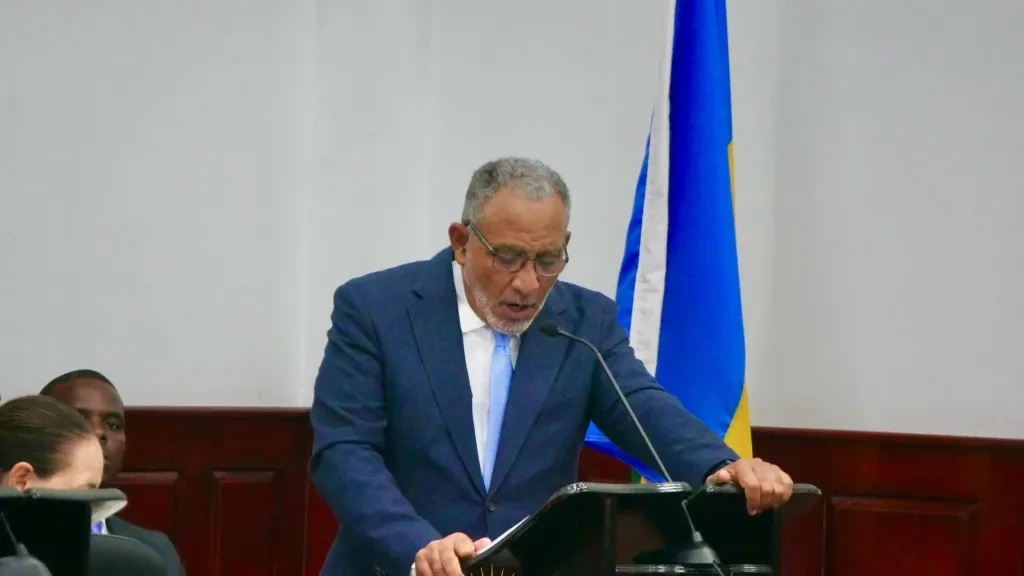
“This is not discretionary spending,” Friday told Parliament. “It is structured investment. It is resilience by design.”
Residency requirements, continuous due diligence throughout the life of citizenship, and multi-layered background screening will anchor the program’s integrity framework. SVG remains the only independent OECS nation without an operational CBI program, a distinction Friday frames as an advantage.
Entering the CBI space “at a pivotal moment” allows the government to study what other countries have done and adopt best practices, the Prime Minister has previously noted.
The Cocaine Analogy
Gonsalves, who governed from 2001 until his Unity Labour Party’s landslide defeat in November’s election, losing 14 of 15 seats, used his sharpest language yet against CBI.
“CBI money is like cocaine,” the former Prime Minister told legislators. “Once you’re on it, you’re hooked, and when you don’t have it, you have withdrawal symptoms.”
Those withdrawal symptoms, Gonsalves warned, will not afflict individuals alone but entire nations. He pointed to what he described as declining CBI program receipts across the five OECS countries operating such programs, claiming that St. Kitts and Nevis Prime Minister Terrance Drew recently revealed a 43% drop in CBI revenue for 2024 to 2025.
Western opposition to CBI has evolved beyond regulatory or management concerns, Gonsalves argued. Britain, Europe, and the United States now view these programs as “inherently a security risk.”
Currency Devaluation Warning
The former finance minister raised a question that few Caribbean leaders have publicly addressed: What happens to the Eastern Caribbean dollar if CBI revenue dries up?
OECS nations share a currency pegged to the US dollar at a rate of 2.70 to one. Should foreign exchange inflows from CBI diminish, Gonsalves warned, governments face a binary choice.
They can either withdraw EC dollars from circulation to maintain the peg, or sustain the money supply and accept de facto devaluation.
“The real effective exchange rate will be altered,” the Opposition Leader cautioned. “And once that genie comes out of the bottle, mark my words,” countries dependent on CBI will confront a balance of payments crisis.
A drop in CBI-derived foreign exchange, Gonsalves argued, would trigger “inflation” and “flight of capital,” creating a spiral of economic hardship similar to what Jamaica has experienced.
He urged Caribbean nations operating CBI programs to “get together, acknowledge that the end is nigh” and negotiate a multilateral adjustment package involving the United States, Britain, Canada, the European Union, the World Bank, the International Monetary Fund (IMF), and regional development banks. Some assistance may arrive as grants, Gonsalves conceded, but “a lot of it is going to be in soft loans.”
The former Prime Minister drew a parallel to the collapse of the banana trade, which forced Dominica, Saint Lucia, and Saint Vincent into structural adjustments decades ago. That earlier shock, he argued, “was small compared to this” and posed fewer threats to external accounts.
Residency Requirements and Market Realities
Friday dismissed suggestions that residency mandates would render the program uncompetitive. Gonsalves countered that lengthy residency requirements will simply deter applicants, noting that Vincentian law already permits citizenship after specific periods of residence.
“But not many persons go for that, because for them, that time is too long,” Gonsalves observed. “Two months residential? Three months?”
Caribbean neighbors have already moved toward residency mandates under Western pressure. St. Kitts and Nevis announced in June 2025 that it would eventually require residency for all future applicants. The other four Caribbean states with CBI programs have also agreed to implement residency requirements as per the Memorandum of Agreement they all signed.
The government projects $10 million in CBI revenue for 2026, a figure Gonsalves mocked during the debate. With a mid-2026 launch target, the administration faces the task of standing up a CBI unit that the former Prime Minister alleges currently has “no staff, no budget.”
Friday’s administration inherits a constrained borrowing capacity and, if Gonsalves’ claims hold, a geopolitical minefield requiring it to satisfy Washington’s preferences while pursuing a program the US has signaled it opposes.
The Prime Minister has argued he “doesn’t believe these developments are a death knell for such programs,” expressing confidence that demand among high-net-worth individuals, “whose interests often gain priority in global affairs,” will sustain the market.
