

Resale dynamics matter more than purchase price when you’re evaluating citizenship by investment (CBI) property.
The three major CBI real estate markets (Caribbean, Turkey, and Egypt) work in completely different ways, and understanding those differences determines whether you’re buying actual real estate or just a complicated way to get a passport.
Here’s what actually happens in each market when you try to get out.
Caribbean Markets Lock Buyers Into Developer-Controlled Channels
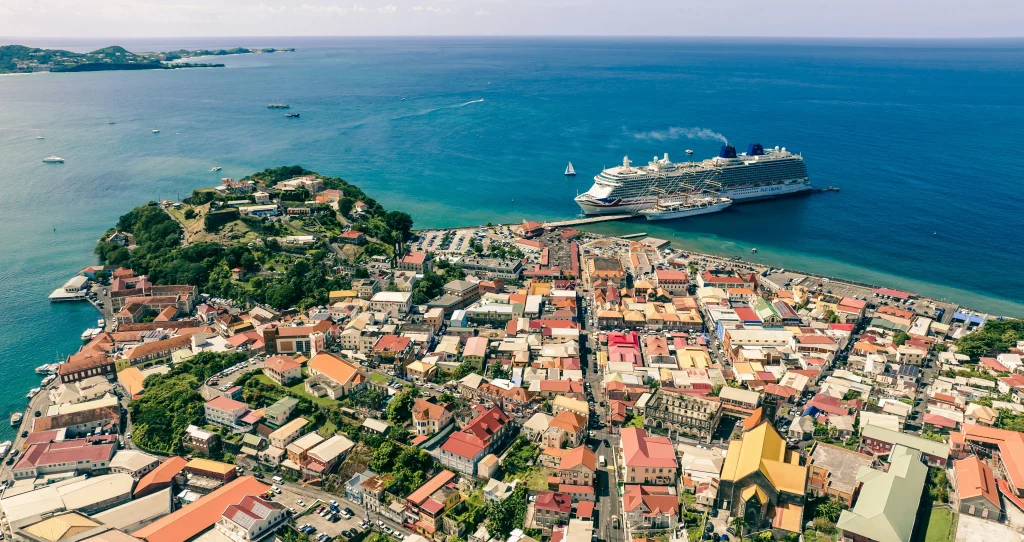
Caribbean CBI real estate splits into two categories: Actual titled properties and preferred shares in resort developments. Both face the same problem: Your buyer pool consists almost entirely of future citizenship applicants.
Titled properties give you at least some chance of listing on broader markets, though transfer restrictions and management contracts usually kill that option.

Preferred shares come with no management rights and returns that lag basically every other investment you could make, which means only citizenship seekers care about them.
Antigua & Barbuda locks you in for five years before you can resell. St. Kitts & Nevis stretches that to seven.
The pricing psychology works against you from day one. When someone shopping for citizenship can buy fresh developer inventory at the $200,000 program minimum, why would they pay you $250,000 for your used investment? They wouldn’t, unless your property offers something genuinely special.
Resale channels run through RCBI advisories or back to the developers who sold you the property. Advisories make commissions selling new inventory directly from developers, so they have no reason to push your resale stock.
Developers buying back your investment need room for their own margin plus commissions on the next sale, which means they’re pricing you near program minimums anyway.

One investor with a $200,000 share investment got an $80,000 buyback offer from the developer. Shares get hit harder than titled properties because they tie even more tightly to CBI demand, and their returns don’t justify holding them for any reason except citizenship.
None of the five Caribbean CBI jurisdictions (St. Kitts & Nevis, Antigua & Barbuda, Dominica, Grenada, or St. Lucia) publishes official house price indices or real transaction databases.
Grenada gives you the best data through Terra Caribbean, which tracked 366 transactions worth about EC $143.4 million in the first half of 2025.
Antigua & Barbuda finished digitizing its land registry a few years back, which speeds up processing but does nothing to expand your actual buyer pool.
Bottom line: Caribbean CBI property delivers citizenship first, real estate second. Titled properties in strong tourism markets might appreciate, but the structural setup favors developers over individual investors trying to exit.
That is not to say that this applies across the board, however, because you can still sell your property on the open market. Is it probable? No. Is it impossible? Also no. It depends on the property, the market, and how much you are willing to make (or lose).
Turkish Transaction Volumes Dwarf Caribbean Markets by Orders of Magnitude
Turkey’s real estate market runs with transparency you rarely see in emerging markets. The Central Bank of Turkey publishes detailed residential property price indices that track performance across regions and time periods.
December 2025 national prices jumped 29% year-over-year in nominal Turkish lira terms. Real inflation-adjusted returns dropped 1.4%. Istanbul’s residential property price index climbed 28.5% nominally while slipping 0.2% month-over-month.
Transaction volumes tell you this is a real market. Turkey recorded 1.7 million house sales in 2025, up 14.3% from the previous year. Istanbul alone moved 280,262 units.
Foreign buyers stay small but consistent. They bought 21,534 properties nationally in 2025, with 7,989 of those in Istanbul. Foreign purchases make up roughly 1.3% of total market activity.
The market offers genuine appreciation potential depending on location, timing, and currency movements. Nominal gains in Turkish lira can deliver strong returns when the currency holds steady against the dollar, though inflation and exchange rate swings introduce real risk.

Turkish law has one technical quirk for citizenship investors: Properties already used to qualify for citizenship can’t be recycled for the next applicant.
Resale buyers who want citizenship need to buy properties that haven’t been used for that purpose yet.
In practice, this barely matters. CBI applicants represent roughly 1.3% of purchases, so cutting them out of your potential buyer pool removes a tiny slice of an already small segment.
Consumer protection rules give you withdrawal rights for distance sales and certain prepaid housing contracts, though these work for specific transaction types rather than all real estate deals.
The reality: Turkish CBI property behaves like Turkish real estate that happens to qualify for citizenship. Resale follows normal market patterns where neighborhood quality, macro conditions, and currency movements drive what happens to your money.
Egyptian Developers Ignore CBI Buyers Because Local Demand Exceeds Supply
Egypt’s housing market runs hot with supply and transaction activity that makes Caribbean volumes look microscopic.
Cairo delivered 32,000 homes in 2025, up 34% from 24,000 the previous year. Knight Frank projects roughly 99,700 units coming in 2028, with around 221,000 homes currently available across 139 projects.
JLL puts Cairo’s residential stock at about 317,000 units by Q3 2025. New Administrative Capital’s R7 district alone completed around 7,500 units that quarter.
The market’s energy comes from domestic demand that exceeds supply. Banks offer aggressive leverage, and getting a loan stays relatively straightforward, which keeps properties moving quickly. Price things right, and you can flip fast.
This explains why Egypt’s citizenship program barely registers in real estate despite competitive pricing. Developers don’t need CBI buyers to move inventory, so commissions for citizenship-linked sales stay minimal. Local demand runs the show.
Egypt opened its citizenship program to all real estate inventory in September 2023 after previously limiting it to government-owned properties. January 2024 amendments had already loosened foreign ownership rules to allow land purchases for investment.

Resale in Egyptian markets follows standard real estate patterns. Properties go up or down based on location, development quality, timing, and broader economic conditions. Quick flips work in high-demand areas, especially when buyers use installment plans or catch favorable currency moves.
Cairo lacks an official house price index like Turkey’s Central Bank series. Knight Frank publishes price-per-square-meter benchmarks by district and product type, which helps with pricing but doesn’t give you the standardized quarterly tracking Turkey offers.
Currency movements matter more than anything else for foreign investors calculating USD returns. Knight Frank quotes prices in Egyptian pounds per square meter, so exchange rate swings during your holding period can multiply or wipe out local price gains.
The point: Egyptian CBI property works as normal real estate in a supply-heavy market. Citizenship qualification adds nothing special and creates no constraints. Evaluate properties on standard real estate fundamentals, not program dynamics.
Program Structure Determines Whether You Own Real Estate or a Citizenship Product
Caribbean properties function as citizenship delivery mechanisms first, real estate second. If you need a passport and can accept a steep discount on exit, fine. But don’t pretend you’re making a real estate investment.
Turkey and Egypt offer actual property markets where fundamentals matter. You might make money, you might not, but at least you’re playing the same game as everyone else buying real estate in those countries. Currency swings will probably matter more than anything happening to the property itself.
The question isn’t which market is “better.” It’s whether you understand what you’re actually buying.
