

People acquire a second or third citizenship, above all, for optionality: The freedom to enter more places, the standing to call on more than one government, and a fallback if one country turns difficult. That group keeps growing.
Across Europe and the Americas, the share of states allowing dual citizenship climbed from about a quarter in 1990 to more than 80% by 2016, the sociologist Yossi Harpaz has documented, and most countries now permit some form of it.
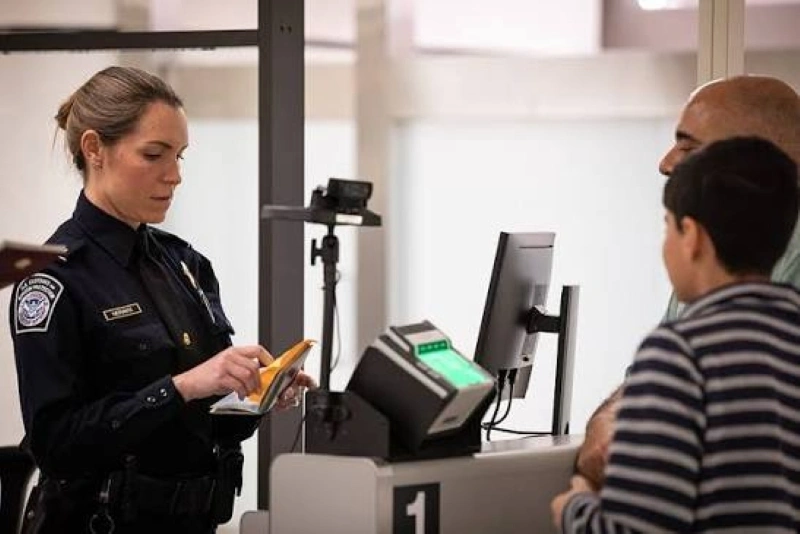
The passport itself, though, is just the object. What matters is the trail of records it creates at every airline counter, immigration desk, and exit gate.
Enter a country on one passport and leave on another, and you can read in its system as a person who arrived and never left. Document discipline prevents it, and the rule is easy to state and easy to forget: Present the right document to the right authority, every time, so that no two systems tell conflicting stories about you.
Get it right and the second passport does what you bought it for. Slip, and you risk showing up as an overstayer, losing the consular protection you assumed you had, or triggering obligations, military service among them, that you never saw coming. Biometric borders are making the records harder to fudge, but the rules that keep you clean are old, and they apply far beyond Europe.

The Golden Rules
- Match the record, country by country.
Enter and leave each country on the same passport. A mismatch hands one government an arrival with no matching departure, which is precisely how a clean traveler lands on an overstayer list. - Tell the airline the passport you will enter on.
Carriers transmit Advance Passenger Information to destination governments and pay fines for boarding anyone a border will turn away, so check in with the document that admits you to where you are going. The database they check, Timatic, does not know your travel history; it only reads the passport in front of it. - Use the destination’s passport if you hold it, otherwise the one with the best access.
At the border of a country where you are a citizen, that country generally expects its own passport. Everywhere else, present whichever document gets you in visa-free or fastest, then exit on that same one. - In a country that claims you, use the document it requires.
If you remain its citizen, that usually means its passport, and your other one buys you nothing there but suspicion if you produce it. But if you have renounced or lost that nationality, do not rely on an old passport; carry proof of the loss or renunciation instead. - Carry every passport, but show one at a time.
Keep them separate and discreet. Two conflicting passports on the same counter invite questions you do not want to answer; produce the second only if an officer asks. - Check both countries’ rules before you travel, not at the gate.
Conscription, exit bans, and tax exposure attach to your citizenship and residence, not to the passport you show; what the passport changes is how fast authorities spot the issue and how they treat you. The US State Department’s standing advice is to research the laws of any country that considers you a national before you go.
Rule one carries most of the weight; the others just keep you from tripping over the airline, the gate, or a government that has decided you belong to it.
Putting the Rules Into Practice
Take the most common trip: a round journey between two countries where you are a citizen, both of which recognize dual nationality. A US and German citizen flying from New York to Frankfurt leaves the US on her US passport, as American law requires, and enters Germany on her German one, dropping into the EU lane.
To the airline, what matters is whether her destination will admit her, so she shows the passport for the country she is flying into, German for Frankfurt. Leaving the US is the wrinkle: It records its citizens’ departures and wants them on a US passport, so on that leg she may show the US passport at the counter and the German one at the gate.
Coming home, she leaves Germany on the German passport and re-enters the United States on the American one. Each government sees a consistent pair of records, an entry and an exit on the same document.
Going somewhere you hold no citizenship is simpler. Flying to Japan or Thailand, the same traveler picks whichever passport gives the better entry, presents it on arrival, and leaves on the same document. The non-recognition rules that complicate some destinations do not apply, because to that country she is just another foreign visitor choosing a lane.
The Countries That Treat You as Theirs Alone
A second category of country refuses to see your other nationality at all, and there the cost of a mistake shifts from a missed lane to a lost right.
Washington is the gentler case: It permits dual nationality, unlike China or India, but still deals with US citizens as US citizens at the border. Its State Department instructs dual nationals that they “must enter and leave the United States” on a US passport, with no foreign-passport alternative, and the Department of Homeland Security routinely cancels the visa-waiver approvals that dual citizens cannot use anyway.
Non-recognition does its real damage to consular help. American guidance warns that local authorities may refuse to acknowledge your US nationality if you are also their national, especially if you did not enter on your US passport, and may bar US officials from so much as visiting you in detention. The passport you entered on can decide whether your embassy can reach you at all.
China sits at the strict end. Its Nationality Law recognizes no dual nationality, and a Chinese national who settles abroad and then takes another citizenship of his own will lose his Chinese nationality automatically, without ceremony or notice.
Many keep a Chinese passport in the resulting gray zone, but Britain’s Foreign Office is blunt about the exposure: Enter China on a Chinese passport or identity card, and “the British Embassy will not be able to offer you help.” If you have formally renounced, it advises, carry the paperwork that proves it.
Xiao Jianhua, a Chinese-born tycoon who held Canadian citizenship and an Antiguan citizenship, vanished from a Hong Kong hotel in 2017 and resurfaced in mainland custody. Beijing declared him a Chinese national with no claim to foreign consular protection, barred Canadian diplomats from his Shanghai trial, and handed him 13 years. His other citizenships changed nothing.

India reaches the same place differently. Its constitution prohibits dual citizenship outright, and the Overseas Citizen of India (OCI) card that many mistake for a substitute is a lifelong visa, not citizenship. You travel in on your foreign passport and the OCI card together, and you do not present yourself as a citizen, because in law you are not one.
Japan, in principle, demands a choice. Dual nationals generally must pick one nationality, in most cases by age 20 since the country lowered its age of majority to 18 in 2022, though enforcement is light and many quietly keep both. The working rule for all of these states is identical: Inside their borders, you are theirs, you use their document, and you expect no help from anyone else’s embassy.
Protection runs the other way in a country where you hold no nationality. There, your home consulate can usually help whatever passport you traveled on; a dual British and French national in Germany still gets full British assistance. It narrows only in the country that counts you as its own.
Europe’s New Border Issue
Europe just rewired how its borders record entries and exits. The European Union’s Entry/Exit System (EES) began rolling out on 12 October 2025 and reached full operation across the Schengen countries on 10 April 2026, replacing passport stamps with digital entry and exit records for non-EU short-stay travelers and an automatic 90-days-in-180 count.
In its first four months, from that October launch, it processed roughly 17 million travelers, flagged more than 4,000 overstayers, and recorded some 16,000 refusals of entry.
For a dual national who holds an EU nationality, this settles which passport to use. EES does not apply to citizens of the European Union, the European Economic Area, or Switzerland, so the EU passport, which confers free movement rather than visa-free access, keeps you out of the biometric file and off the 90/180 clock entirely.
The European Travel Information and Authorisation System (ETIAS), the €20 pre-travel clearance due to start in late 2026 and become mandatory by October 2027, works the same way: Hold an EU citizenship and you are exempt, but you must travel on the EU passport that the exemption attaches to.
Investment migrants face an added wrinkle. An IMI survey found that one in three investment migration executives expect ETIAS to become an instrument for scrutinizing holders of citizenship by investment passports, and since December 2025 the EU’s revised visa-suspension mechanism has made the operation of such a program an independent ground for suspension.
For anyone who acquired a passport partly for European access, which document to show, and what attention it draws, is no longer a small question.
The Edge Cases That Catch People Out
Conscription is the one that surprises people most. Somewhere between 60 and 85 countries conscript at least part of their citizenry, and a second passport rarely cancels the obligation of the first.
South Korea can call up dual-national men, sometimes catching them on a visit, and requires that they renounce by 31 March of the year they turn 18 or stay liable into their late thirties. Yoo Seung-jun, a singer, took US citizenship to escape conscription; Seoul has blocked his return for more than 20 years.
Greece, Turkey, Israel, and Russia all assert service obligations on citizens abroad under various conditions. The US State Department warns that the duty can land the moment you arrive or when you try to leave, and an exit ban can hold your passport while the matter drags on.
Names are the quieter hazard. Marriage, transliteration, and legal changes leave many dual nationals with passports that do not spell their name identically, and the airline’s record must match the one you present at check-in. Book under the name in the passport you will travel on, and carry the certificate that explains any gap.
Britain has required foreign visitors to carry an Electronic Travel Authorisation since early 2025, and from 25 February 2026 carriers must deny boarding to anyone without one.
A British or Irish dual national cannot get one, so they travel on a British or Irish passport, or a certificate of entitlement, instead. These pre-clearance systems, ETIAS and the American visa waiver among them, all assume you are a foreigner unless your passport says otherwise.
Automated gates read one chip, so use the passport that matches the lane and keep the spare ready for when the gate balks. Keep every passport valid well ahead of expiry, since many countries demand six months’ validity beyond your stay, though the Schengen Area asks for three. And on overland and ferry crossings, where officers can be stricter about prior stamps, carry proof that you left the previous country legally.
A Working Order at the Border
Reduce it to a sequence you can run anywhere. If you are a citizen of the country you are entering, use that passport, and for the Schengen Area any EU nationality serves and lifts you off the EES clock.
When the country claims you exclusively, China, India, or the United States on the way home, use its document and expect no outside consular help. For everywhere else, choose the passport with the better access and enter and exit on it.
Then hand the airline the document you will cross the destination border on, and keep the rest close, because the spare is both your fallback and, if something goes wrong far from home, your way to reach help.
The mobility a second citizenship confers is real, and for many it is the whole point of holding one. It is also conditional. A passport in a drawer is worth exactly as much as the discipline with which you use it.



