Most digital nomad visas drop you into a tax problem. Stay in a new country long enough on a remote work permit, and you trip the 183-day threshold that most tax authorities use to claim you as a resident. At that point, your foreign salary starts getting taxed locally, whatever your original visa promised.
A smaller group of programs sidesteps this entirely. Some are based in jurisdictions that don’t levy personal income tax at all. Others write a statutory exemption directly into the digital nomad visa law. A third category relies on territorial taxation, where foreign-sourced income is never subject to local tax no matter how long you stay. A few are simply too short to trigger residency in the first place.
This guide covers 15 Digital Nomad Visas (DNVs) that fit one of those four categories. For each, the tax mechanism is stated explicitly, along with the income threshold, stay duration, and family inclusion rules drawn from IMI’s Complete Digital Nomad Visa Guide.
Programs that look cheap or lifestyle-friendly but pull you into the host country’s tax net are excluded. Two formerly popular options, Bermuda’s Work From Bermuda Certificate and the Cayman Islands’ Global Citizen Concierge Program, are also excluded because both have closed since 2024. If citizenship is your ultimate aim, a different list applies; see IMI’s breakdown of digital nomad visas that actually lead to citizenship.
None of these programs eliminates tax obligations in your country of citizenship or prior tax residency. Americans file worldwide under any circumstance. Europeans, Canadians, Australians, and others may retain residual obligations until they formally exit their domestic tax system. The visa only controls your exposure in the host country.
Jurisdictions With No Personal Income Tax
These three programs sit in countries that don’t tax personal income at all. Tax residency status is effectively moot, because no individual is taxed on employment or self-employment earnings regardless of how long they stay.
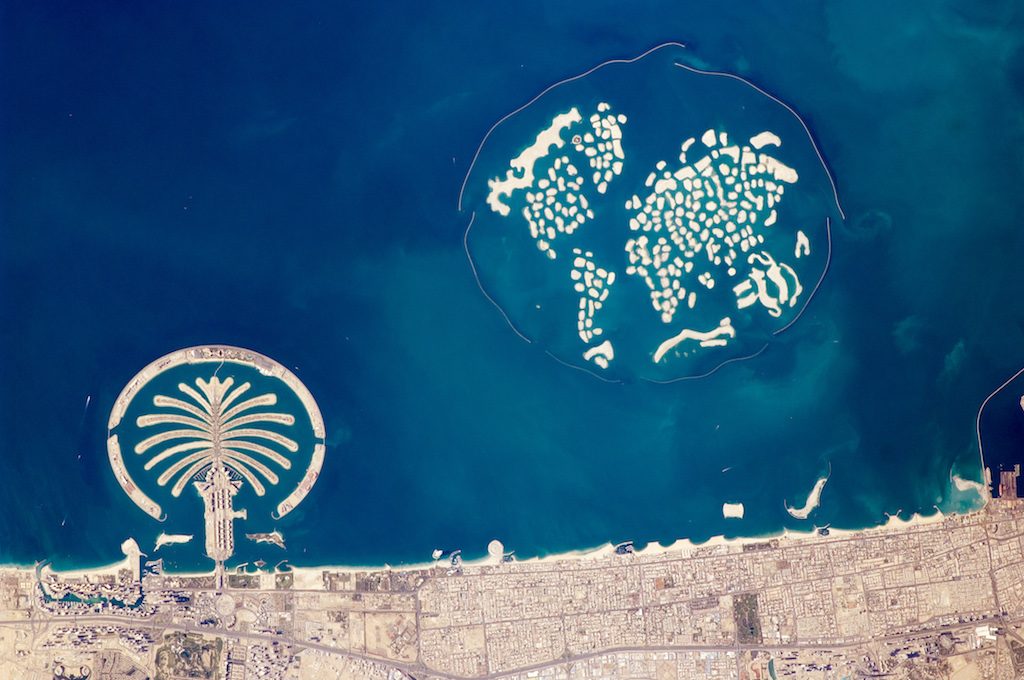
1. United Arab Emirates Virtual Working Programme (0% personal income tax)
The UAE imposes no federal or Emirate-level personal income tax on salaries, dividends, capital gains, or investment income. PwC’s current Worldwide Tax Summary confirms there are no plans to introduce one. Remote work income earned under the Dubai Virtual Working Programme or the federal Virtual Work Residency is not taxed.
Applicants need a minimum monthly salary of US$3,500, a valid one-year employment contract (or equivalent proof of business ownership), and private health insurance. The visa runs for one year and is renewable.
Fees vary by emirate and application route: Applying outside Dubai through the Federal Authority for Identity and Citizenship costs roughly US$100 to US$300, while Dubai’s Virtual Working Programme route typically totals around US$600 once Emirates ID, medical testing, and application charges are included.
A 9% corporate tax applies to natural persons carrying on a business activity with annual turnover above AED 1 million (roughly US$272,000). Salaries, personal investment income, and real estate income are excluded from that turnover calculation, so standard remote employees fall outside its scope.
Family inclusion is permitted. There is no path to permanent residency through this visa, though holders can switch into other UAE residency tracks, including the Golden Visa, if they qualify.
2. Anguilla Work Remotely Programme (0% personal income tax)
Anguilla levies has no income, capital gains, inheritance or corporate tax outside specific banking and insurance sectors. Government revenue comes primarily from customs duties, goods and services tax, and property-related levies.
The Work Remotely programme grants a one-year permit with family inclusion. The application fee is US$2,000, with additional fees for dependents. Requirements include proof of remote work, health insurance, and a clean criminal record. Processing runs seven to 14 days. The visa does not carry a renewal mechanism.
Anguilla operates a separate High-Value Resident (HVR) program, launched in 2019, that grants tax residency to applicants who pay a US$75,000 annual lump-sum tax, hold a minimum US$400,000 in Anguillian real estate, spend at least 45 days per year in Anguilla, and declare they will not spend more than 183 days in any other single jurisdiction.
CEO of Select Anguilla Philip Kisob previously described the HVR track to IMI as aimed at “low-volume, high-value” applicants who move between jurisdictions throughout the year. The HVR is structurally different from Anguilla’s separate Residence by Investment track, which grants permanent residency rather than tax residency.
3. Antigua and Barbuda Nomad Digital Residence (0% personal income tax)
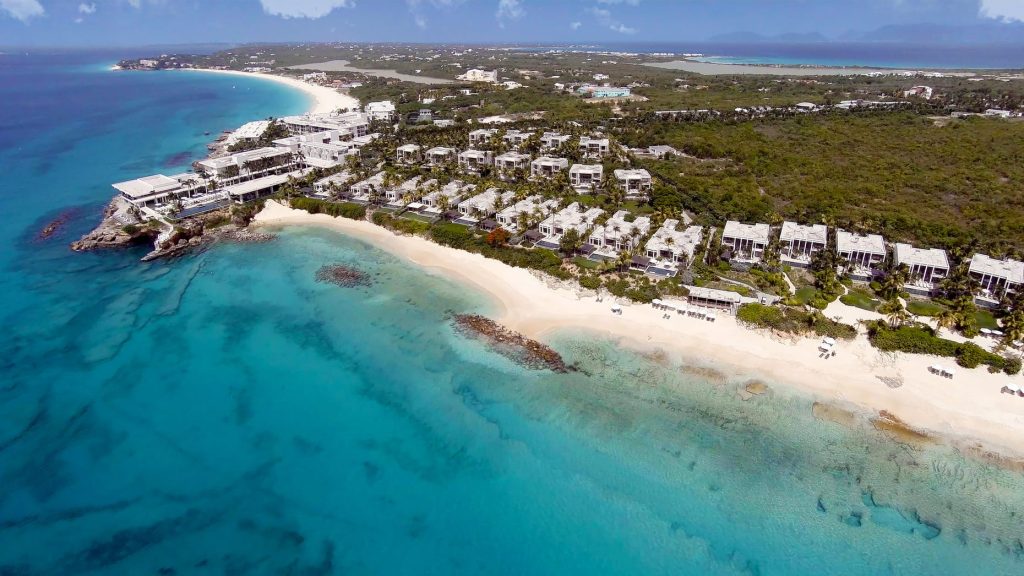
Antigua and Barbuda eliminated its personal income tax in April 2016. The country also imposes no capital gains tax, no inheritance tax, and no wealth tax on individuals. Residents and non-residents alike pay zero on local or foreign personal income.
The Nomad Digital Residence (NDR) visa is valid for two years and is non-renewable on a lifetime basis, meaning applicants cannot apply a second time once their permit expires. Required annual income is US$50,000. Family members, including spouse and dependent children, can be included on one application.
Fees are tiered: US$1,500 for a single applicant, US$2,000 for a couple, US$3,000 for a family of up to four, and US$650 for each additional family member. Applicants must be employed or contracted outside Antigua and Barbuda.
Becoming a formal tax resident requires 183 days of physical presence, but because no personal income tax applies, this distinction has no practical cost.
Programs With Statutory Tax Exemptions Written Into the Visa
These six programs sit in countries that would otherwise tax resident income, but the DNV legislation explicitly carves out foreign-source remote work earnings.
4. Croatia Digital Nomad Visa (statutory exemption on foreign income)
Croatia’s digital nomad visa, introduced in January 2021, grants an explicit income tax exemption on foreign-source employment and business income for the duration of the permit under Article 9.1.26 of the Croatian Personal Income Tax Act.
KPMG Croatia confirmed the exemption in a tax law update published shortly after the visa launched. The legal structure treats DNV holders as non-residents for income tax purposes regardless of how long they stay, which prevents the usual 183-day trigger from applying to qualifying remote work income.
An amendment to the Law on Foreigners that took effect March 15, 2025 extended the maximum stay from 12 months to 18 months. The permit remains non-renewable consecutively; to reapply, applicants must leave Croatia for at least six months.
As of early 2026, the minimum monthly income requirement is approximately €3,622.50, calculated as 2.5 times Croatia’s average net monthly salary. The figure adjusts automatically when Croatian wage data is updated. Savings-based alternatives of approximately €43,470 for a 12-month stay or €65,205 for 18 months are also accepted.
The exemption applies only to income from foreign sources. Any Croatian-source income earned while on the permit, such as work for local clients, falls under standard tax rules and voids the exemption on that portion. Family members can be included.
5. Costa Rica Rentista for Remote Work (statutory exemption under Law 10,008)
Costa Rica’s Digital Nomads Law (Law No. 10,008) was signed by then-President Carlos Alvarado on August 11, 2021 and entered into force on September 1, 2021. Implementing regulations were delayed by inter-institutional disagreements and were eventually formalized through Executive Decree No. 43619, signed by President Rodrigo Chaves Robles in July 2022.
The law explicitly exempts visa holders from Costa Rican income tax on foreign-source earnings, waives import duties on personal computers, work equipment, and related electronics, and authorizes holders to open Costa Rican bank accounts and use their home-country driver’s licenses.
The visa is initially valid for one year and renewable for a second year, for a maximum two-year stay. The minimum monthly income requirement is US$3,000, rising to US$4,000 for applicants bringing dependents.
Costa Rica operates a territorial tax system anyway, so foreign-source income is generally not taxed at source. The Digital Nomad Law adds a layer of statutory certainty by codifying the exemption specifically for remote workers, closing any ambiguity about whether extended stays could trigger worldwide taxation.

6. Barbados Welcome Stamp (statutory non-resident treatment)
The Barbados Welcome Stamp was created by the Remote Employment Act 2020 (Act 23 of 2020) and is one of the earliest and clearest examples of a DNV with a purpose-built tax carve-out. Welcome Stamp holders are treated as non-residents for Barbados income tax purposes under Sections 3(c) and 4 of the Act, regardless of how long they remain in the country. This prevents the 183-day residency threshold from activating a tax liability on foreign earnings.
The visa runs for 12 months and is renewable. The income threshold confirmed on the official Welcome Stamp application portal and Invest Barbados is US$50,000 per year, though the underlying Section 3(b)(i) of the Remote Employment Act references US$100,000; applicants should confirm the operational figure with the Barbados authorities at application time. Application fees are US$2,000 for a single applicant and US$3,000 for a family.
Welcome Stamp holders can request a Barbados Tax Identification Number (TIN), which is sometimes required by home-country banks for CRS compliance, but this does not create a local tax obligation. The Barbados Revenue Authority’s official position is that the visa is designed to prevent double taxation. Local employment is prohibited and would void the exemption.
7. Dominica Work in Nature (statutory income tax waiver)
Dominica’s Work in Nature (WIN) Extended Stay Visa includes a formal income tax waiver for foreign-source earnings. The official WIN programme website lists the income tax waiver among the benefits extended to visa holders, and the program’s fee page confirms that capital gains and dividend taxes also do not apply to WIN holders on their foreign-source income.
The visa runs for 18 months and is not renewable. Minimum income is US$50,000 per year. Application fees begin at US$100 plus US$800 for the visa itself (US$900 total for a single applicant, US$1,200 for a family).
Dominica otherwise taxes residents on worldwide income at progressive rates up to 35%. The WIN exemption is what keeps remote workers outside that regime. Spouses and dependent children can be included. The visa does not lead to permanent residency or citizenship through remote work, though Dominica operates a separate Citizenship by Investment (CBI) program that remains among the longest-running in the Caribbean.
8. Montserrat Remote Workers Stamp (statutory tax exemption)
Montserrat’s tax system is otherwise progressive: Residents face income tax brackets that climb as high as 40%, plus social security contributions of 5% on the employee side. The Remote Workers Stamp, launched in January 2021, sits outside that framework. Visa holders are not liable for Montserrat income tax during their stay, a benefit confirmed both on the official montserratremoteworker.com program site and consistently across legal commentary.
The Stamp grants a 12-month residence permit with a renewal option subject to meeting the standard requirements. The minimum annual income is US$70,000 from a foreign employer, foreign-registered business, or freelance contracts with overseas clients. Fees are US$500 for an individual, US$750 for a family of up to four (main applicant plus three dependents), and US$250 per additional dependent. Applications are processed online, typically within seven working days.
Montserrat is the smallest Caribbean nation by population on this list, with fewer than 6,000 residents. Internet speeds and amenities reflect the scale; Stamp holders should expect roughly 20 Mbps fixed broadband and 3G mobile data in much of the island. The trade-off is one of the lowest-density Caribbean DNV options available.
9. Curaçao @HOME in Curaçao (statutory non-resident tax treatment)
Curaçao’s @HOME in Curaçao programme, administered by the Curaçao Tourist Board, allows remote workers, freelancers, entrepreneurs, and “snowbird” hibernators to live on the island for six months, renewable once for a combined 12-month stay. Visa holders are not classified as Curaçao tax residents during the permit period and are not subject to local income tax on foreign earnings, provided employment with or services for any local Curaçao employer is avoided.
The programme imposes no minimum income requirement, though applicants must demonstrate sufficient funds, a clean criminal record, and proof of remote work arrangements with foreign entities. The application fee is approximately ANG 535 (around US$300 per applicant). Processing typically completes in two weeks, with all documents submitted online. Spouses and dependents can be included.
The visa does not lead to permanent residency. Curaçao otherwise operates a progressive personal income tax system reaching above 40%, so the exemption is structurally what makes the programme tax-efficient for remote workers, not the overall tax architecture.
Territorial Tax Regimes
These five countries tax only locally sourced income. Foreign-source earnings, including salaries paid by foreign employers and revenue from foreign clients, fall outside the tax net regardless of physical presence. Becoming a “tax resident” in these countries carries no cost on remote work income, because the tax base never extended to that income in the first place.
10. Panama Short Stay Visa for Remote Workers (territorial taxation)
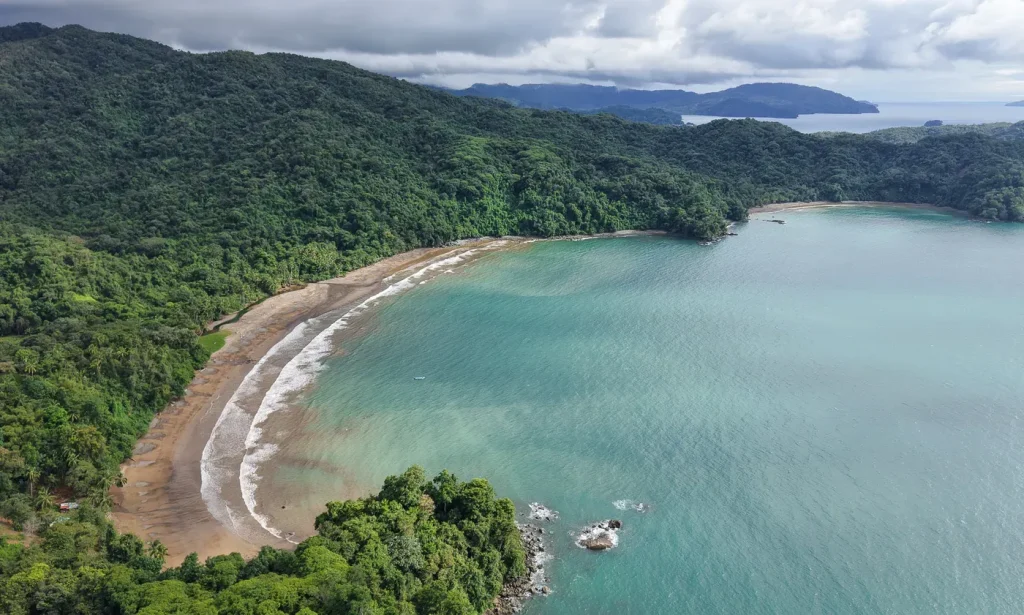
Panama introduced its Short Stay Visa for Remote Workers through Executive Decree 198 in May 2021. Panama’s tax system is territorial, meaning only income generated within Panama is subject to Panamanian income tax. Remote work income earned from foreign clients or employers falls outside this scope.
The visa is initially valid for nine months and can be extended once for a total of 18 months. The minimum annual income threshold is US$36,000 from foreign sources. Government fees total US$300 (US$250 application plus US$50 for the visa card), with attorney fees typically bringing total costs to US$800 to US$2,000. Panamanian immigration law requires applications to be filed through a licensed local attorney.
The visa is issued to individuals only and does not allow dependents to be included. Families typically use the Friendly Nations Visa or another residency track. Panama reformed the Friendly Nations Visa in 2021 to remove its former immediate permanent residency track; it now grants a two-year temporary permit first.
11. Uruguay Digital Nomad Permit (territorial-style treatment of employment income)
Uruguay’s Digital Nomad Permit holders are not automatically tax residents. Tax residency triggers only if you spend more than 183 days in Uruguay in a calendar year, establish your center of vital interests there, or make a qualifying investment. DNV holders who stay under 183 days remain non-residents and are not taxed in Uruguay on any foreign income.
Foreign employment income remains exempt from Uruguayan tax for residents as well, under Uruguay’s historical territorial treatment of wages and salaries. Foreign passive income, however, is a different story. Uruguay’s 2025 to 2029 national budget, Ley 20.446, substantially revised the regime effective January 1, 2026. Foreign dividends, interest, capital gains, and rental income from non-resident entities are now subject to 12% Uruguayan income tax (IRPF) for residents who do not elect the tax holiday.
The 60-day presence route to the holiday was eliminated, and the minimum real estate investment required to qualify through the property path was raised to approximately US$2 million. An alternative path now requires US$100,000 per year invested into Uruguay’s National Innovation Fund for 11 consecutive years.
Qualifying new residents who elect the holiday receive a full exemption on foreign-source capital income for 11 years (the year of acquisition plus 10 calendar years), followed by a five-year transition taxed at 6%, and the standard 12% rate thereafter. The previous 7% flat-rate alternative is being phased out for new residents, though existing holiday holders are explicitly grandfathered. IMI covered the full reform in February 2026.
For the typical digital nomad earning employment income from foreign clients or employers, the practical effect is unchanged: No Uruguayan tax on that income, whether you stay under 183 days as a non-resident or cross the threshold as a resident. The reforms matter mainly for nomads whose income mix includes substantial foreign dividends, interest, or capital gains.
The Digital Nomad Permit itself runs for 180 days and is renewable once for a combined 12-month stay. A small administrative fee of approximately US$11 applies, payable from within Uruguay. There is no fixed income threshold, but applicants should demonstrate sufficient monthly funds (typically US$1,500 to US$2,000) and valid health insurance. The permit was launched in 2023 and applies to remote employees, freelancers, and self-employed professionals working for non-Uruguayan entities.
12. Malaysia DE Rantau Nomad Pass (territorial taxation with foreign income exemption through 2036)
Malaysia operates a territorial tax system under which foreign-sourced income received by individuals is generally exempt. Budget 2025 extended the foreign-sourced income (FSI) exemption for individuals through December 31, 2036. DE Rantau Nomad Pass holders working remotely for non-Malaysian employers or clients are not taxed on that income.
One condition applies: The exemption is formally contingent on the income having been subject to tax in its country of origin. For most remote workers paid through foreign payroll systems in countries that tax employment income, this condition is met automatically. Nomads whose income flows through zero-tax jurisdictions without any tax charge at source should confirm how the Inland Revenue Board of Malaysia treats their specific arrangement before relying on the exemption.
The pass is administered by the Malaysia Digital Economy Corporation (MDEC). The initial validity is three to 12 months, renewable for an additional 12 months, for a combined 24-month stay. The income requirement is US$24,000 per year. Application fees are approximately RM 1,000 plus immigration pass fees.
The pass covers remote workers in IT, digital marketing, digital creative content, and related professional domains. It is valid for Peninsular Malaysia only and does not extend to Sabah or Sarawak. Spouse and dependent children can be included.
13. Seychelles Workation Retreat (territorial taxation)
Seychelles operates a territorial tax system, confirmed by the Seychelles Revenue Commission. Only income sourced within Seychelles is subject to local income tax. Foreign-source remote work income is exempt regardless of the visa holder’s length of stay.
The Workation Retreat visitor permit is valid for up to one year, with a possible six-month extension. There is no formal minimum income requirement, but applicants must demonstrate employment with a foreign company or independent business income, alongside proof of funds, health insurance, and a clean criminal record. The application fee is approximately €45.
Seychelles also has no capital gains tax and no inheritance tax. The permit does not lead to permanent residency through the Workation track, but it functions as one of the most tax-efficient options in the Indian Ocean region.
14. Mauritius Premium Visa (remittance basis taxation)
Mauritius operates a tax system that exempts Premium Visa holders from local income tax on foreign earnings for the first 183 days of stay. Past that threshold, holders become tax residents but are taxed on a remittance basis under Sections 5 and 73 of the Mauritius Income Tax Act: Foreign-source income is only subject to Mauritian tax if and when it is brought into a Mauritian bank account. Spending via foreign credit or debit cards does not constitute a remittance, a position confirmed in the Dilloo Supreme Court case.
The Premium Visa is valid for up to one year and renewable. The minimum income requirement is US$1,500 per month. There is no application fee for the visa itself. Processing can be as fast as 48 hours on paper, though in practice applicants should budget several weeks.
For income that is brought into Mauritius and falls within the local tax net, the rates are now progressive following a 2023 reform updated again with effect from July 1, 2025. The current scale is 0% on the first MUR 500,000, 10% on the next MUR 500,000, and 20% on chargeable income above MUR 1 million.
The Finance Act 2025 layered on a 15% Fair Share Contribution for individuals with annual net income above MUR 12 million, lifting the effective top rate to 35% through June 2028. None of these rates touches foreign income that stays in foreign accounts during the Premium Visa year. Family dependents can be included on one application.
Short-Stay Programs That Don’t Trigger Residency
15. Japan Digital Nomad Visa (six-month cap below the residency threshold)
Japan launched its digital nomad visa in 2024 under the “Designated Activities” category (No. 53 for the main applicant, No. 54 for dependents). The visa is valid for six months and is explicitly non-renewable. Applicants must leave Japan for at least six consecutive months before reapplying.
Japan’s tax residency definition requires continuous presence of one year or more, or establishment of domicile. DNV holders cannot meet either test within the six-month window. Japanese income tax law treats them as non-residents, meaning foreign-source remote work income is not taxed in Japan.
The income requirement is ¥10 million annually (approximately US$67,000 to US$68,000 depending on exchange rate), which makes this the highest-threshold program on this list. Applicants must hold citizenship from one of approximately 49 eligible countries with existing visa waiver and tax treaty agreements with Japan, a list that may be adjusted by the Ministry of Foreign Affairs over time.
Spouses and children can accompany the main applicant under the same visa category, though each must meet separate health insurance requirements.
The visa does not grant a residence card (zairyu card), which limits access to services like standard bank accounts and long-term mobile contracts. No path to permanent residency or citizenship runs through the DNV.

How to Think About the Choice
None of these 15 programs resolves your home-country obligations. U.S. citizens file worldwide. European and Commonwealth nationals often retain obligations to their country of prior tax residency until they formally exit.
The DNV handles local exposure; exiting your domestic tax system is a separate question that depends on your citizenship, your prior domicile, and the tax treaties between the two jurisdictions. Verify your full position with a qualified cross-border tax advisor before relocating.