
Last month, Prime Minister Kyriakos Mitsotakis announced that Greece would raise its property transfer tax from 3% to 15% for buyers from outside the European Union.
Two days later, the Ministry of National Economy and Finance narrowed the measure to residential property bought by individuals, exempted Greek citizens, the diaspora, EU and EEA nationals, and long-term residents, and set the start date at July 1, 2027.
For the Greece Golden Visa, the cost is straightforward. Once the municipal surcharge is added, the effective rate moves from 3.09% to 15.45%. On a €250,000 converted apartment, the route that now draws most of the program’s demand, transfer tax rises from €7,725 to €38,625.
An €800,000 apartment in Attica, the minimum for the standard route in the capital, goes from €24,720 to €123,600. The €400,000 route for the rest of the country, which sees little real demand, moves from €12,360 to €61,800.
The less obvious effect is on supply. Greece’s golden visa market was already short of eligible property before the announcement, and a tax increase scheduled nine months out squeezes it from both sides: buyers bring purchases forward, while developers, who need permits and change-of-use paperwork in place before they can sell, have little time and little reason to launch new projects before the rate changes.
At Astons, an investment migration firm founded in London in 1989 and now headquartered in Dubai, we help investors buy golden visa property in Greece through our office in Athens.
Since the announcement, we have been checking every project we offer against the July 2027 date as well as the program’s eligibility rules.
No bill has yet been tabled, parliament has not voted, and national elections are due in spring 2027, so every deed signed in Greece pays 3.09% until a law passes.
The ministry has not carved out the €250,000 conversion route, and as announced the measure captures it: a converted apartment is residential property bought by a non-EU individual. Unless an exemption is written into the bill, buyers should assume the 15% applies.
The ministry has also not said whether deposits and preliminary agreements signed before July 2027 will be protected.
Demand Was Already Repricing
The tax lands on a market two years into a different adjustment. When Greece raised its standard thresholds to €800,000 in Attica and €400,000 elsewhere in 2024, applications hit a record 9,372 as investors moved to lock in the old rules, then fell 25% to 7,021 in 2025.
In the first seven months of 2026 they fell to 3,086, down 39% year on year.
The figures indicate a restructuring rather than a collapse; buyers who left were those seeking apartments near the old €250,000 level in Athens and Piraeus; those who stayed shifted almost entirely to the €250,000 commercial-to-residential conversion route, which now accounts for most new filings.
Chinese investors hold just over half of all active permits. Turkish citizens, the fastest-growing group, held 15.9% of initial permits by December 2025 and lead applications in Thessaloniki and across northern Greece.
In 2024, both groups responded to an announced threshold increase by accelerating, and the transfer tax gives them a longer runway and a larger price gap to act on.
Two further deadlines fall before July 2027. The suspension of 24% VAT on new builds and the suspension of the 15% capital gains tax on property both expire on December 31, 2026, with no renewal decided.
Supply Is the Constraint That Bites First
The standard routes require a single property of at least 120 square meters, which excludes most of the apartment stock in central Athens. The conversion route has no size floor but requires a building whose change of use from commercial to residential is formally registered.
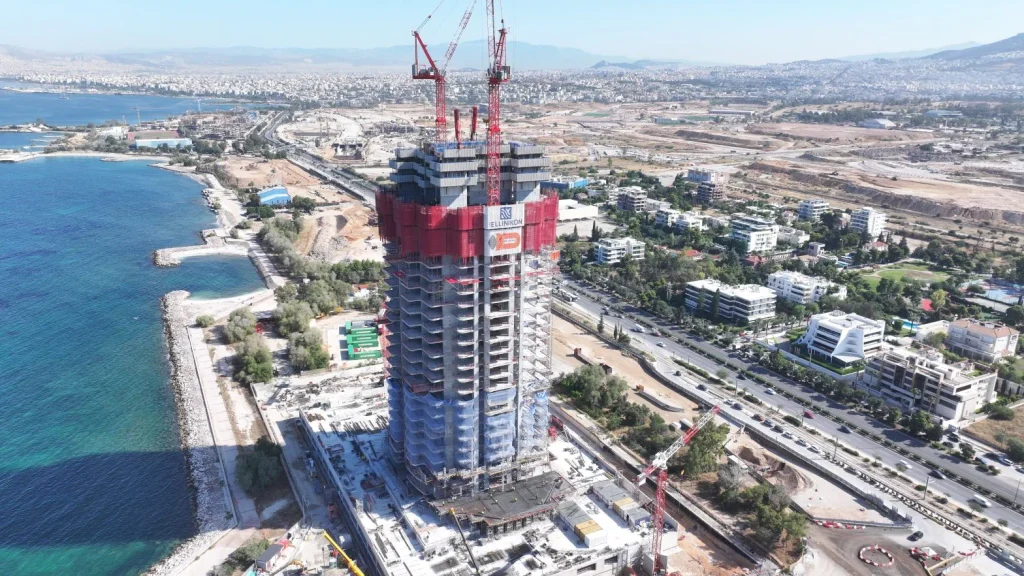
The result is a market dominated by small apartments, most of them created by converting former offices and commercial buildings. Developers acquire the buildings, convert them, and sell completed or to-be-completed units from €250,000.
The pipeline behind that stock is now the open question. A developer cannot sell a project until the permit, change-of-use registration, and engineer’s certification are in place, which takes months, so a project started today would reach buyers close to or after July 2027. With that calendar and no certainty about non-EU demand at the higher rate, developers have reason to hold back new launches, and the shortage of eligible property is more likely to tighten through 2027 than to ease.
Buyers who move before July 2027 will compete for the units that can close in time: conversions with change-of-use paperwork in order, new builds whose permits show 120 square meters, and the few Attica resales that clear the size and price thresholds together.
Those are the strongest properties in each category, because clean documentation and a deed that can be signed in time are what make a golden visa property worth buying.
An investor who waits could therefore pay twice. The transfer tax rises by about €99,000 on an €800,000 purchase, and the choice narrows to what is already in the pipeline, since projects not yet launched are unlikely to be deliverable in time, leaving units in secondary locations or with documentation still being assembled.
As announced, the tax is triggered by the deed, not the reservation. A buyer who reserves in early 2027 but cannot sign the deed until 2028 is, absent transitional rules, exposed to 15% at closing; a buyer who signs the deed before July 2027, whether or not the building is finished, is not.
How a New Development Works for the Golden Visa
Under the €800,000 and €400,000 routes, off-plan and under-construction purchases qualify. The 120-square-meter minimum is checked against the building permit, the full price must be paid through a Greek bank from funds originating abroad, and the application can be filed once payment clears, whether or not the building is finished.
Under the €250,000 conversion route, the application turns on the change-of-use documentation rather than on whether the building is finished. A permit issued for offices and later amended to residences does not count; the change of use must be formally registered and certified by an engineer. Once that paperwork is in place, an investor can sign, pay, and file while construction continues, and we have investors filing today on projects still under works.
Either way, the sequence is a preliminary agreement and deposit, usually 10%, a notarial deed signed under power of attorney, full payment, and an electronic filing within days.
Approval brings a temporary entry permit, then one trip to Greece for biometrics within a year. For our clients, the typical timeframe from filing to residence permit is seven to eight months; the fastest cases clear in four.
Timing still depends on the regional office handling the file, and the national backlog keeps shrinking, at 29,273 files at the end of July, down from more than 52,000 at the start of 2025.
In our experience, delays are more often caused by the property than by the ministry: a missing permit, incomplete change-of-use documentation, or a legal complication in the title. That is why we run our own due diligence on every developer and project before a client commits, led by Nasos Fousias, who spent around 20 years on the developer side before joining us and reviews each file personally.
The property also determines which tax a buyer pays at the deed. A new build sold by a developer carries 24% VAT unless the developer has opted into the suspension regime, in which case the transfer tax applies instead, and that suspension ends on December 31, 2026 unless extended.
Whether new builds would face the proposed 15% at all is also still open. Greek press has reported that the ministry is weighing an exemption for buyers who add to the housing stock, which would cover conversions and new builds, but nothing has been confirmed as of writing.
Where the Program Goes From Here
The transfer tax is one of two proposals now aimed at the program’s property route. The other comes from PASOK, Greece’s main opposition party, which has tabled a parliamentary amendment to abolish the real estate route entirely and redirect foreign capital toward a proposed Angel Visa tied to business investment. The ruling New Democracy party dismissed it, and with just over 30 of parliament’s 300 seats, PASOK cannot pass it alone.
The government, for its part, is intent on reshaping the program rather than closing it. Since 2024 it has raised thresholds, banned short-term letting of golden visa property, and, under Law 5275/2026, fixed the five-year permit to run from the date the card is issued rather than the filing date.
Alongside the transfer tax, the National Housing Policy Strategy 2026 to 2035, published in August, proposes a new category allowing an investor to spread the qualifying amount across several properties, all placed on the long-term rental market; it has no implementing legislation yet.
The program remains Europe’s most popular, with 34,278 active investor permits at the end of July, up from 22,001 a year earlier, though entry now costs more than it did and fewer properties qualify.
Astons on the Greek Market




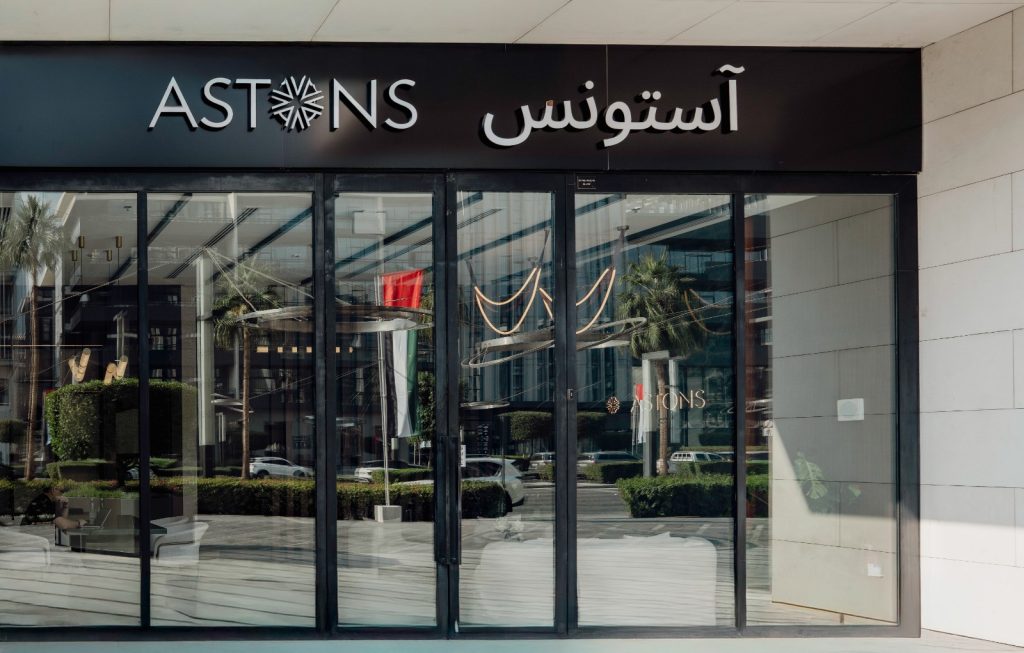


Our Greek operation runs from Glyfada, on the Athens Riviera, where in-house attorneys licensed by the Athens Bar Association work alongside our property department, so the legal and property sides of every purchase sit under one roof. The office won the Real Estate Agency category for Greece at the 2024 to 2025 European Property Awards.
Qualifying for the golden visa is not enough for a property to make our portfolio; we assess each one as an investment in its own right, and location comes first.
Our portfolio spans new residential developments and conversions from Ellinikon and Glyfada on the Riviera to Piraeus and central districts such as Kallithea, Tavros, Neo Irakleio, and Gazi, sourced from some of the largest developers in Greece.
At Astons, we model the full acquisition cost under both tax regimes, check each project’s route against the July 2027 date, and handle the legal work through our own licensed attorneys. Schedule a consultation.