
11 Digital Nomad Visas That Actually Lead to Citizenship
Most digital nomad visas function as long-stay tourist visas. These 11 programs offer something different: codified paths to PR and citizenship in Europe, Latin America, and Asia.

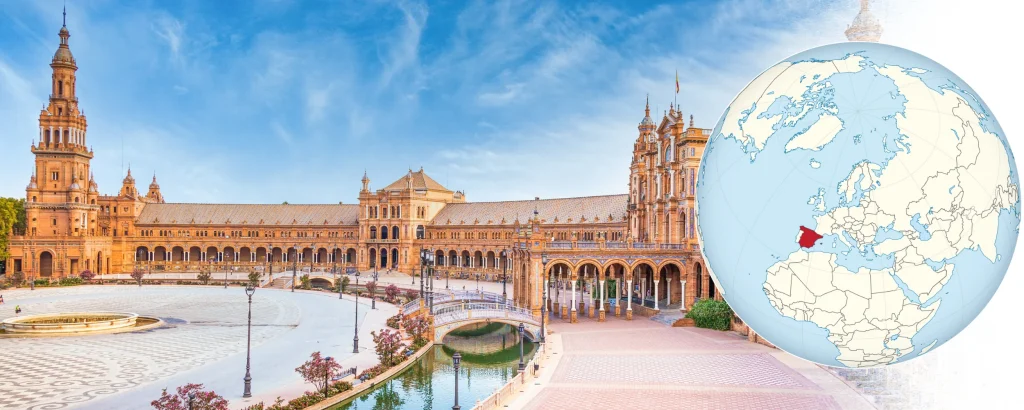
Spain’s Non-Lucrative Visa offers third-country nationals who can demonstrate sufficient personal savings to maintain themselves without working the opportunity to reside in Spain together with their families.
The program offers a five-year path to permanent residency in Spain and a ten-year (two years for certain nationalities) path to EU citizenship.
No investments or donations are required for the Non-Lucrative Visa. Applicants must merely show a certain minimum bank account balance (currently about €28,000 a year) to qualify.
Spain’s Non-Lucrative Visa grants residence permits to individuals who have sufficient savings to maintain themselves without working in Spain. In Year 1, the applicant is issued a one-year residence permit. In Year 2, the applicant is issued a two-year residence permit. In Year 4, the applicant is issued another two-year residence permit. In year five, the applicant becomes eligible for permanent residency.
In the first year, the applicant must prove that they have a balance equal to at least 400% of IPREM, an economic indicator used as a reference for the granting of public benefits. In 2022, 400% of IPREM equates to just under €28,000. An additional annual bank balance of €6,950 is required for each dependent included in the application.
For a renewal in Year 2, the applicant must show proof of funds sufficient to maintain themselves and their families for two years to renew their residence permits for two years, i.e., a balance of at least €56,000 (and an additional €13,900 per family member). Similarly, in Year 4, the applicant must show the same balance as in Year 2 in order to receive another two-year residence permit.
An application fee of €550 applies, though this price may vary between consulates.
The Spanish Non-Lucrative Visa is first issued for one year of residency. Applicants who maintain a physical presence of more than 183 in the first year are able to renew the visa for a further two years every second year.
After five years of continuous residency, applicants are eligible for permanent residency, provided they have not spent more than 10 months outside of Spain during the preceding five years.
After ten years of continuous residency, the applicant may apply for citizenship. However, if the applicant is from a country of Ibero-American Community – Latin-American countries as well as Portugal, Andorra, the Philippines, and Equatorial Guinea – he may apply for citizenship after just two years of residency.
Additionally, the applicant must pass the DELE test, indicating European Spanish language proficiency, and a cultural and historical knowledge exam called the CCSE (Conocimientos Constitucionales y Socioculturales de España).
Browse 195 countries’ paths to citizenship in the hyper-detailed IMI Citizenship Catalog.
Applications for this program may be directed to Ministerio de Asuntos Exteriores.
Legislation upon which this program is based Organic Law 8/2000 Chapter 1 Article 30 to 31: Royal Decree 557/2011 of April 20th Articles 45 to 49.

Most digital nomad visas function as long-stay tourist visas. These 11 programs offer something different: codified paths to PR and citizenship in Europe, Latin America, and Asia.

Elisa de Mollinedo Suarez breaks down Madrid’s Mbappé Law and who actually benefits from the 20% deduction.

From golden visa closures to crypto source of funds to new programs, the first half of 2025 brought a lot of change to investment migration.
See more statistics on this program and others in the IMI Data Center.