

A leaked, longer draft of the Trump administration’s National Security Strategy reportedly identifies Austria, Hungary, Italy, and Poland as priority partners Washington should pull away from the European Union while establishing a new five-power forum with China and Russia, according to Defense One and other outlets.
The document purportedly frames European immigration policy as driving “civilizational erasure” and calls for fundamentally reorienting transatlantic ties.
The longer version allegedly circulated before the White House released its condensed 33-page NSS last Thursday. Defense One reports it outlines plans for a “Core Five” forum comprising the United States, China, Russia, India, and Japan that would meet regularly for summits on specific themes, beginning with Middle East security and normalization between Israel and Saudi Arabia.

Unlike the Group of Seven, which requires that members be both wealthy democracies, the proposed C5 would reportedly focus on major powers regardless of political system.
European representation remains absent from this structure, marking a departure from the postwar assumption that America’s primary partnerships flow through democratic alliances.

The White House has publicly denied the existence of any alternative NSS, insisting the 33-page public version is the strategy guiding US policy.
Four Nations Targeted for Realignment
Austria, Hungary, Italy, and Poland reportedly emerge as countries the United States should “work more with… with the goal of pulling them away from the [European Union],” according to Defense One’s account.
The strategy allegedly recommends supporting “parties, movements, and intellectual and cultural figures who seek sovereignty and preservation or restoration of traditional European ways of life,” provided they remain pro-American.
Mass immigration and multiculturalism reportedly provide the justification throughout the document for this proposed realignment. Brussels stands accused of “transforming the continent and creating strife” through migration policies that purportedly undermine national sovereignty and political liberty.
President Trump reinforced these themes during a Tuesday interview with Politico, describing European nations as “decaying” under “politically correct” leadership. Immigration policies are “destroying” countries that are “falling apart,” he argued, while European leaders remain too weak to reverse course.

These four nations share governments or influential movements aligned with restrictive immigration positions and skepticism toward EU authority on border control. Hungary under Viktor Orbán has built border fences and refused refugee quotas.
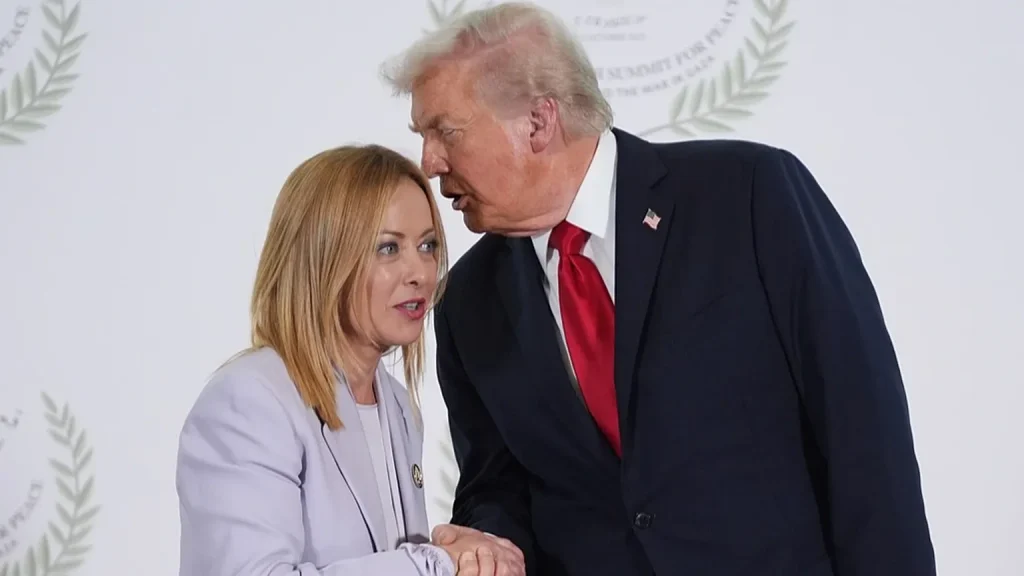
Italy’s Giorgia Meloni rose to power on pledges to stem irregular Mediterranean arrivals. Poland’s political landscape includes figures who opposed EU relocation mechanisms. Austria has shifted rightward on asylum policy over the past decade.
Effect on Investment Migration
Any movement by these four nations away from EU structures would damage the value proposition of their residence and citizenship programs. Italy’s golden visa program commands premiums because it provides Schengen access and EU mobility rights.
Hungary’s Guest Investor Program (GIP) attracts international applicants in part because it opens doors across the continent. Austrian citizenship, available through exceptional contribution provisions though not marketed as a formal program, derives a lot of its value from the European passport it confers.
Poland lacks a formal investment migration program, but any future residence by investment offerings would face immediate devaluation if EU membership came into question.
Citizenship by descent programs in these nations, particularly Italy’s popular jure sanguinis pathway, would remain legally intact as they operate under national law rather than EU frameworks, but the value proposition would be affected as passports would no longer provide broader European access.
Separation from Brussels would reduce all these offerings to national residence without broader European access.

Rafael Cintron, chief executive of Wealthy Expat, notes that economic realities make actual exits unlikely despite American pressure, saying “if Trump wants those countries to leave, then he will have to break the entire union.”
Poland receives substantial net transfers from EU coffers, while more than half its exports flow to other member states. “There’s absolutely no way they would leave like the UK did,” Cintron adds, pointing to economic interdependence Britain never experienced to the same degree.
European Pushback
White House Deputy Press Secretary Anna Kelly denied on Wednesday that any alternative version exists, insisting President Trump has “signed a national security strategy that clearly directs the US government to implement its established principles and priorities.”
António Costa, president of the European Council, declared that Washington lacks the authority to dictate which political parties Europeans should support or oppose. “The United States cannot replace European citizens in choosing which are the right parties and which are the wrong parties,” he stated.
German Chancellor Friedrich Merz called portions of the strategy “understandable” and “comprehensible” while insisting Europe must develop greater security independence from American guarantees. Polish Prime Minister Donald Tusk appealed directly to Washington via X, writing that “Europe is your closest ally, not your problem.”
Dutch politician Geert Wilders welcomed the document’s framing, praising Trump for speaking “the truth” about immigration. “Europe is changing rapidly into a medieval continent thanks to open borders and mass immigration,” he wrote, endorsing the strategy’s characterization of demographic change as cultural erasure.
Leaked Draft or Strategic Blueprint
Multiple outlets have reported consistent details from a longer leaked draft that allegedly circulated internally before the official NSS release. The Times and Daily Mail published similar accounts based on leaked portions, and the ideas align closely with Trump’s public rhetoric on Europe, migration, and alliance structures.
Whether this draft represents final policy, internal debate, or strategic signaling remains unclear.
For investment migration operators in Austria, Hungary, and Italy, the uncertainty complicates program positioning regardless of the document’s formal status. Citizenship and residency products in these markets garner demand partially because they provide European access.
Any credible movement toward EU departure would fundamentally alter what these programs offer to international clients, potentially triggering market repricing before political outcomes are clarified.
