

The detention of Venezuelan President Nicolás Maduro by U.S. Delta Force operatives early Saturday morning marks a watershed moment for a nation that has endured over two decades of economic and social collapse.
Trump said Maduro is set to face narco-terrorism charges in New York. Venezuela now stands at an inflection point that could reshape not only its political landscape but also its appeal to foreign investors and the millions of Venezuelans scattered across the globe.
From Bolivarian Revolution to Potential Free Market Transition
Venezuela’s transformation into a socialist state began with Hugo Chávez’s election in 1998, initiating what became known as the Bolivarian Revolution.
The government nationalized key industries, particularly oil, telecommunications, and electricity, and channeled petroleum revenues into extensive social welfare programs.
The United Socialist Party of Venezuela has governed since 2007, presiding over an economy that, despite never achieving pure socialism, has seen increasing state control even as significant portions remain in private hands.

The 2015 parliamentary elections saw the United Socialist Party lose its legislative majority for the first time since 2000, signaling public discontent that has only intensified through years of hyperinflation, shortages, and economic contraction that reduced GDP by approximately one-third.
The country’s primary opposition leader, María Corina Machado, represents a dramatic ideological shift from the current regime. She has articulated positions that starkly contrast with the ruling party’s socialist ideology, including her assertion that “being rich is a good thing.” She is known for supporting limited government intervention.
But it remains unclear who will be the next leader of Venezuela. Trump said the US will “run the country” through a transitional period.
The Exodus and Prospect of Return
Venezuelan migrants worldwide erupted in celebration Saturday following Maduro’s deposition, according to Reuters.
Since 2014, approximately 7.7 million Venezuelans, 20% of the nation’s population, have fled abroad, according to the U.N. estimates.

Colombia hosts the largest concentration with 2.8 million, followed by Peru with 1.7 million and Spain with 400,000.

The potential for mass repatriation represents a significant economic opportunity for Venezuela.
These 7.7 million emigrants have spent years accumulating capital, building international business networks, and developing professional expertise abroad.
If political stability materializes under new, market-oriented leadership, many might be tempted to return, not just to reunite with family, but also to use their hard currency to establish businesses, invest in real estate at historically low prices, and participate in rebuilding the nation’s economy.
Economic Potential in a Resource-Rich Nation
Venezuela’s fundamental economic assets remain intact despite years of mismanagement.
The country possesses the world’s largest proven oil reserves, substantial natural gas deposits, and rich mineral resources.
Its climate supports year-round agriculture, and its Caribbean coastline offers tourism potential that has gone largely untapped during the socialist era.
The economy has recently undergone de facto dollarization, with most transactions for most products and services now conducted in U.S. dollars rather than the rapidly devaluing bolivar.
The official exchange rate stood at 301 bolivars per dollar at the start of January 2026, a 479% increase from a year earlier. Black market rates are almost double that, at 560 bolivars.
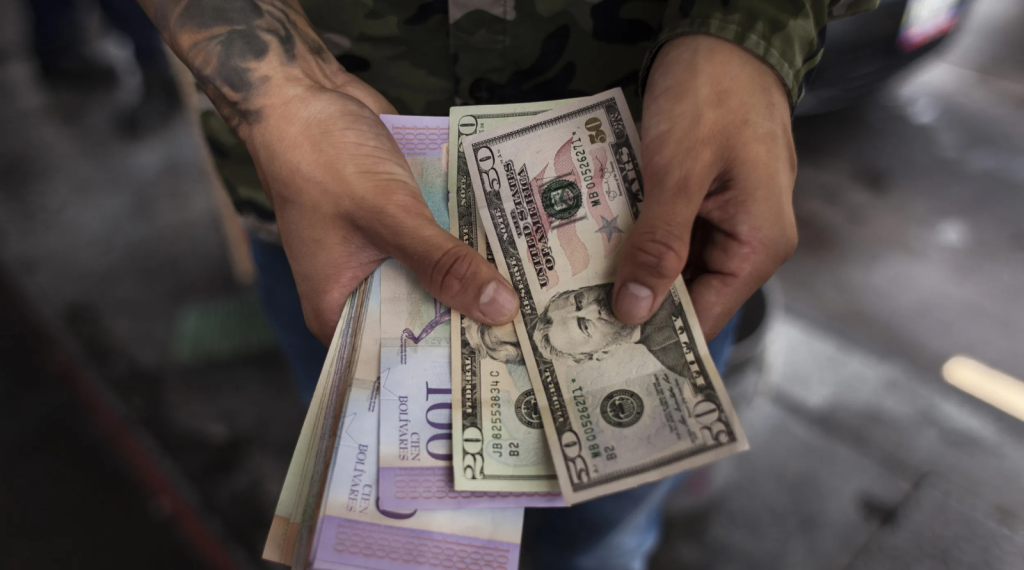
Economists told France 24 that 80% of currency exchanges occur through crypto platforms.
This dollarization may provide a foundation for transactional stability that could facilitate foreign investment if political clarity emerges.
Inflation remained astronomical through 2025, with estimates suggesting rates exceeding 500%.
Property values have fallen roughly 50% from their 2014 purchase prices, which might create “buying the dip” opportunities for local and foreign investors if the political situation stabilizes.
Real Estate Market Defined by Distress and Opportunity
In the capital city of Caracas, an estimated 3,000 unoccupied homes sit empty in the metropolitan area alone, alongside 600,000 square meters of available office space, 1,000,000 square meters of industrial space, and a 200,000-square-meter surplus in retail centers.
The city has become too large for its remaining population, as residents have either departed or relocated to regions where infrastructure collapse was most severe.
Properties requiring less than $50,000 see the most activity, though even these can take over a year to sell.
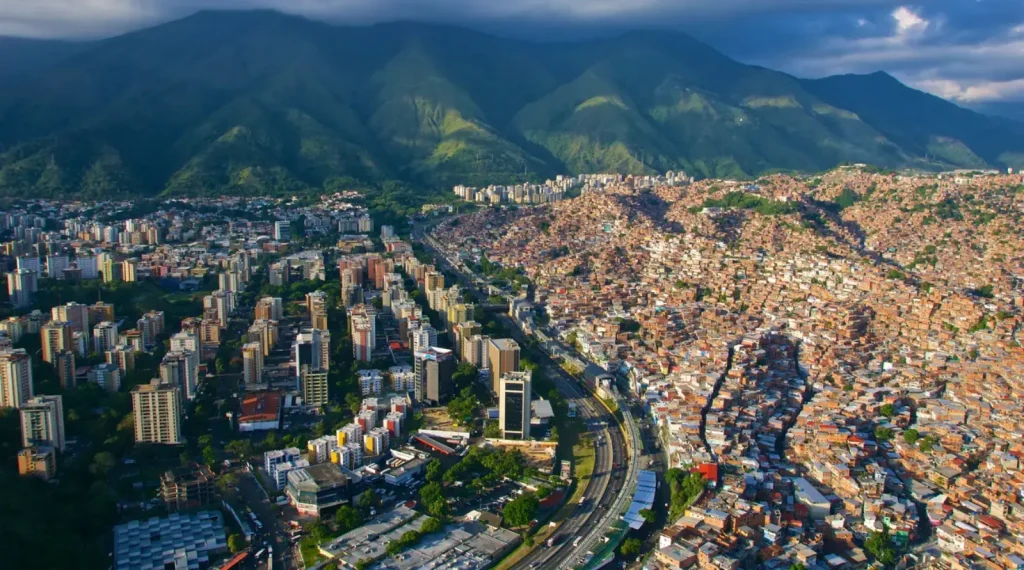
Real estate experts told Spanish newspaper El País that absorbing current inventory at prevailing rates “could require 25 years.”
Higher-value properties have been facing bleaker prospects, with transactions above $50,000 becoming protracted negotiations between agents and owners to reach attractive price points.
The distressed market could present good opportunities for diaspora and investors with appropriate risk tolerance. Properties can be acquired at prices unthinkable during Venezuela’s oil boom years which ended in the early 2000s.
The construction sector, despite operating at historic lows, continues to attract capital as many locals anchor savings in physical assets.
Residency Pathways: Remarkably Accessible Despite Political Turmoil
Venezuela maintains two primary pathways for foreigners to obtain residency that remain surprisingly accessible given the political circumstances.
The Inversionista Visa requires investment in Venezuelan businesses, with the investor acquiring at least 20% of the company’s share capital.
No specific minimum investment amount is stipulated; authorities assess whether investments are deemed sufficient on a case-by-case basis.
This three-year renewable visa grants Transeúnte status, which is convertible after two consecutive years to Residente status; effectively permanent residency valid for five years.

The Rentista visa offers a lower barrier to entry, requiring a foreign-source income of at least $1,200 per month for the primary applicant, plus $500 per month per dependent.
This income can be derived from pensions or any legal source. The one-year renewable visa similarly converts to Residente status after two years.
Both pathways lead to citizenship after ten years of continuous legal residency, reduced to five years for those married to Venezuelan citizens or natural-born citizens of Spain, Portugal, Latin American countries, or Caribbean nations.
Residency maintenance requires avoiding absences exceeding 24 consecutive months, though brief returns to Venezuelan territory reset this clock.
Venezuelan citizenship provides visa-free travel to over 120 countries, including the Schengen Area and Latin America’s MERCOSUR region.
Worldwide Taxation with Limited Exceptions
Venezuela’s tax structure presents challenges for foreign investors seeking tax optimization. The country determines tax residency based on physical presence; spending more than 183 days in Venezuela during either the current or previous calendar year triggers resident status, as does establishing a primary home in the country.
As per current legislation, tax residents are subject to worldwide taxation on all income, regardless of source, with progressive rates from 6% to 34% on net income.
While certain deductions exist for education, healthcare, and mortgage interest, and foreign tax credits can offset some double taxation, the worldwide scope makes Venezuela less attractive than territorial tax jurisdictions elsewhere in Latin America.
Non-residents pay only on Venezuelan-sourced income, typically through a 34% withholding rate applied at source.
Additional levies include 16% VAT on goods and services, municipal taxes on real estate and business activities, and a 0.25% net worth tax on individuals with assets exceeding 150 million Tax Units.
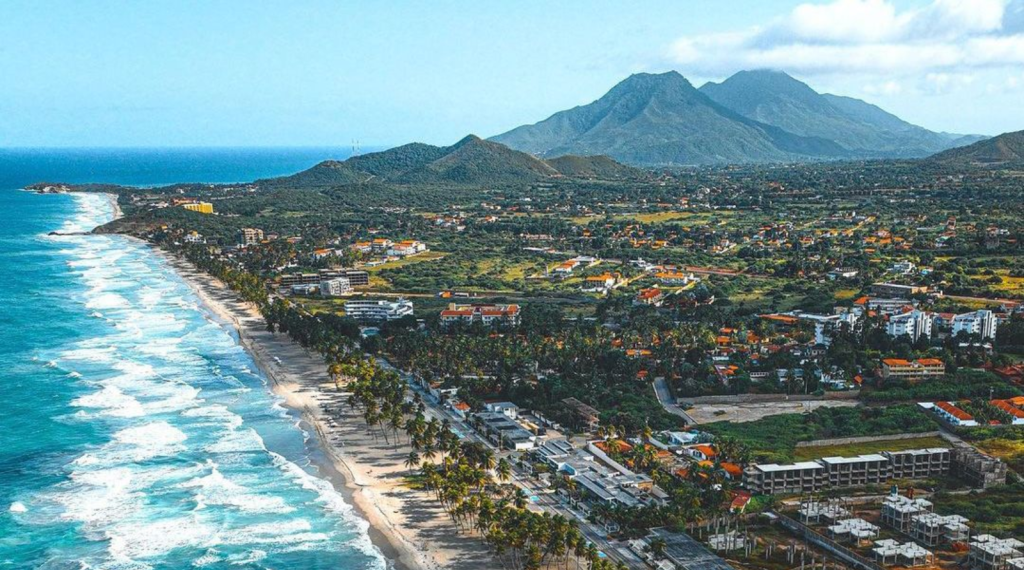
Margarita Island operates under special economic zone regulations that provide more favorable tax treatment than on the mainland in Venezuela, offering a potential exception for those willing to base themselves in this Caribbean location.
IMI Pros Who Can Help with Venezuela Residency
