

Malaysia’s flagship long-term investor residency program, Malaysia My Second Home (MM2H), generated RM3.87 billion ($990 million) in economic contributions by the end of 2025, marking a sharp acceleration from the RM840 million recorded six months earlier at mid-year.
The Tourism, Arts and Culture Ministry unveiled the figures at an “appreciation event” celebrating MM2H agents on Friday, presenting the data as evidence that the program’s 2024 overhaul has reversed years of decline.
From Slowdown to Acceleration
Between 2021 and 2023, MM2H approved only 1,900 applicants as pandemic restrictions and a 2021 policy tightening dampened interest.
The Cabinet-approved revamp in 2024 reshaped the program: it lowered fixed deposit thresholds, removed income proof requirements, and introduced a tiered Platinum-Gold-Silver structure that broadened access.

Since the revised policy took effect in June 2024, authorities have received 14,535 applications, 5,239 from principal applicants and 9,296 from dependants.
In 2024 and 2025 combined, the program approved 9,511 participants across its categories, outpacing the prior three-year period.
Tourism Minister Datuk Seri Tiong King Sing said the program sends a clear message that Malaysia stands ready to open its doors to the world with “stronger governance, greater transparency, and a more efficient system.”
He described MM2H as “an effort to build an international community that chooses Malaysia as a second home because of its stability, cultural diversity, and quality of life.”
The RM3.87 billion headline figure comprises three pillars: participation fees, fixed deposits in local banks, and property investments.

In 2024, the programme collected RM3.3 million in participation fees and RM550.8 million in fixed deposits. In 2025, fees rose to RM10.5 million and fixed deposits climbed to RM1.8 billion, while property purchases added a further RM1.5 billion.
Property accounts for a significant share of the total. Between December 2023 and December 2025, MM2H participants completed 744 transactions.
The ministry expects another RM2.3 billion in property investments from participants currently navigating the purchasing process, with 2,637 prospective buyers actively searching for homes. Should those transactions materialise, total programme contributions would exceed RM6 billion.
China Dominates
Of the 14,535 applications received since mid-2024, Chinese nationals account for 7,600; more than half.
Taiwan ranks second with 2,419, followed by Hong Kong with 604; Singapore, the United States, and the United Kingdom round out the six largest contributor markets.
The pattern extends to property. Chinese buyers completed 304 of the 744 recorded purchases, roughly 41% of all transactions. Taiwanese buyers accounted for 91 and Singaporeans for 63.
That concentration has drawn parliamentary questions. Lawmakers have asked whether such demographic composition aligns with the program’s broader objectives. Tiong pushed back, insisting that MM2H should remain “apolitical,” while acknowledging that promotional efforts have leaned heavily toward East Asian markets.
The ministry has signalled plans to expand outreach to the Middle East and other regions where participation remains low.
State-Level Property Thresholds Add Complexity
The tiered system sets property purchase minimums ranging from RM600,000 for Silver to RM2 million for Platinum. But state-level foreign ownership thresholds can effectively override these federal MM2H benchmarks.
Kuala Lumpur requires foreigners to spend at least RM1 million on residential property, regardless of the MM2H tier. Penang Island sets the bar at RM3 million for landed homes, and Selangor requires RM1.5 million to RM2 million for landed properties, depending on the district.
In practice, Silver-tier applicants seeking to buy in Malaysia’s most sought-after urban centres face higher entry costs than the MM2H framework alone would suggest.
MM2H New Partnerships
The appreciation event also saw the ministry sign a memorandum of understanding with the Bank of China, a move it said aims to strengthen investor confidence and streamline financial processes for participants.
Tiong described such collaboration as vital to reinforcing the program’s stability and credibility.
On the operational side, the ministry has digitalised the application process through an online system and launched a dedicated promotional website.
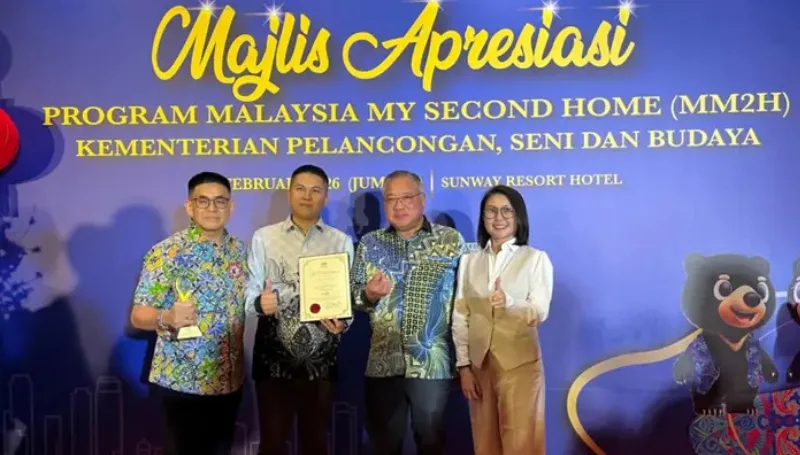
It also recognised 252 licensed operating companies and strategic partners at the event, while urging operators that have yet to record any applications to step up their international outreach. The ministry has issued 255 operating licences to date.
MM2H remains one of Southeast Asia’s most flexible residency options, but it operates in a crowded field. Globevisa’s Hannah Ma recently described the program’s post-reform recovery as a “cautious revival,” noting that rival schemes in Hong Kong and Singapore continue to compete for the same pool of internationally mobile applicants.
IMI Pros Who Can Help with MM2H
